



How AI is driving the shift to M-shaped skills
Nelson Sivalingam at AI learning platform HowNow describes how AI continues to evolve and re-shape the skills landscape
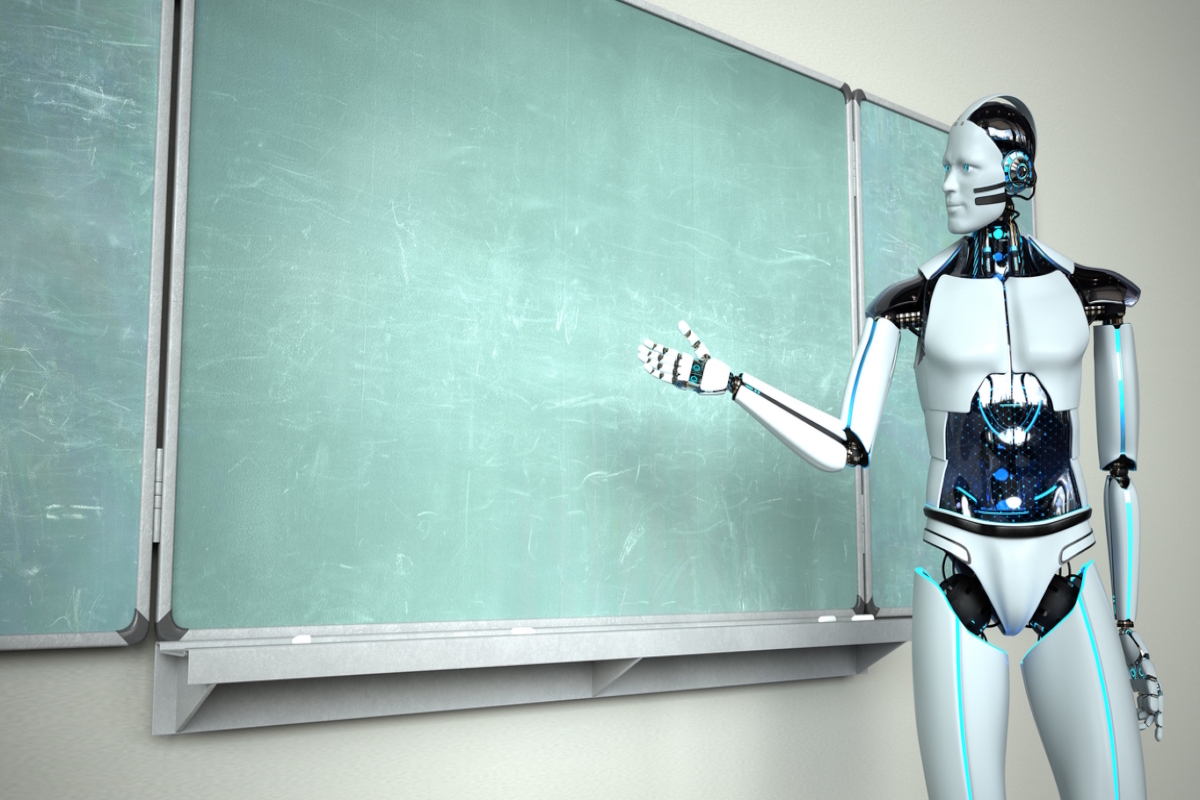
AI is revolutionising every business function across all industries and geographies. Used in the right way, it’s a golden ticket to better efficiency and productivity – and it presents immense opportunities for growth.
AI is also transforming how organisations upskill their people for this new world of work. In 2025, AI learning agents exploded onto the scene and we can expect to see scaling adoption of these autonomous chatbots this year. Underpinned with the most relevant knowledge and expertise, these agents can teach, challenge, coach and adapt to the individual learner’s capabilities and organisational context. Best of all, and for the first time, they’re enabling organisations to scale hyper-personalised teaching.
Two years ago this was still a pipe dream but it’s now an achievable reality for every organisation – and every employee.
AI skills mapping - the ultimate L&D roadmap
Alongside this, AI is helping organisations to obtain a clear and current view of skills across an entire workforce, mapped to job role and even proficiency level. Armed with this data, leaders can accurately assess which requisite skills they already have within their organisation, and work to close the gaps. Thanks to AI, they can also do this in a matter of days or weeks, rather than months.
What we’re talking about here is the ultimate L&D roadmap; a guide that empowers business leaders to make more informed talent decisions and support the achievement of strategic business goals.
So how will AI continue to evolve and re-shape the skills landscape in 2026? Aside from delivering deeper insights and measurable benefits, we’ll also see a marked shift towards M-shaped skills.
From T to M: broadening skillsets
AI is increasingly able to replicate the deep expertise that once defined T-shaped talent. When specialist knowledge can be automated or augmented so effectively, its value — while still important — is no longer what sets people apart. What AI cannot yet do, however, is integrate insights across multiple domains, apply judgement in ambiguous contexts, or connect dots that don’t obviously belong together.
This integrative, cross-disciplinary intelligence is uniquely human, and it’s becoming the new competitive advantage. As a result, we’re seeing the beginnings of a shift from T to M-shaped skills: people with depth in key areas but also adaptability, cross-functional literacy, and the ability to bridge disciplines. Designers who can think like product managers; product managers who can think like engineers; and engineers who can think like designers.
This shift will also change how organisations hire talent. Candidates who can navigate complexity, collaborate across boundaries, and complement AI knowledge with human problem-solving, will find themselves in greater demand. Conversely, the number of organisations looking to recruit employees with single-domain expertise, will wane.
Cross-skilling to compete with AI
At the same time, employees are more aware that they need to deliver value and stay relevant if they are to compete with innovation itself. Sophisticated AI tools can now write advanced code so unless an engineer can bring additional skills to the table, they will become obsolete. Employers want – and need – people who can shape and deliver the overall product and customer experience. In response, we’ll see employees actively seeking to broaden their skillsets as a route to protecting their employability. They recognise that experience alone is no longer enough and so to compete, many will invest in developing their biggest differentiator: the human insight and subjective analysis that AI cannot yet replicate.
Learning and work will become one
Also on the agenda for 2026 is the amalgamation of learning and work. Rather than viewing learning as a distinct exercise that sits outside the flow of work, employees and organisations will start to look at learning and work as one integrated activity.
Most people currently view work as an execution problem but increasingly, employees and managers will begin to look at work as a learning problem. Instead of focusing on how many team members are needed to complete a project, managers will lend more focus to skills as the biggest success factor. It’s a subtle shift in thinking but it’s one that removes barriers and creates new potential. Why? Because with the right skills, any learning (or work) problem can be solved.
Suffice to say, the year ahead presents new opportunities for businesses across the board – and skills sit at the heart of this. Having the right capabilities to deliver the organisation’s strategy will become the biggest driver of competitive advantage and growth. But the world of work is changing at speed and so are the skills required to succeed. In this environment, the organisations that thrive will be those that embrace AI to support rapid learning and cross-disciplinary skills growth at scale.
Nelson Sivalingam is Co-founder and CEO of HowNow - the AI learning and upskilling platform
Main image courtesy of iStockPhoto.com and style-photography

Business Reporter Team
You may also like




Most Viewed


Winston House, 3rd Floor, Units 306-309, 2-4 Dollis Park, London, N3 1HF
23-29 Hendon Lane, London, N3 1RT

020 8349 4363

© 2025, Lyonsdown Limited. Business Reporter® is a registered trademark of Lyonsdown Ltd. VAT registration number: 830519543