



Surviving the SaaS-pocalypse
The SaaS-pocalypse, fundamental disruption of the traditional SaaS business model, might spare big tech, says Chris Ackerson at AlphaSense, but what about everyone else?


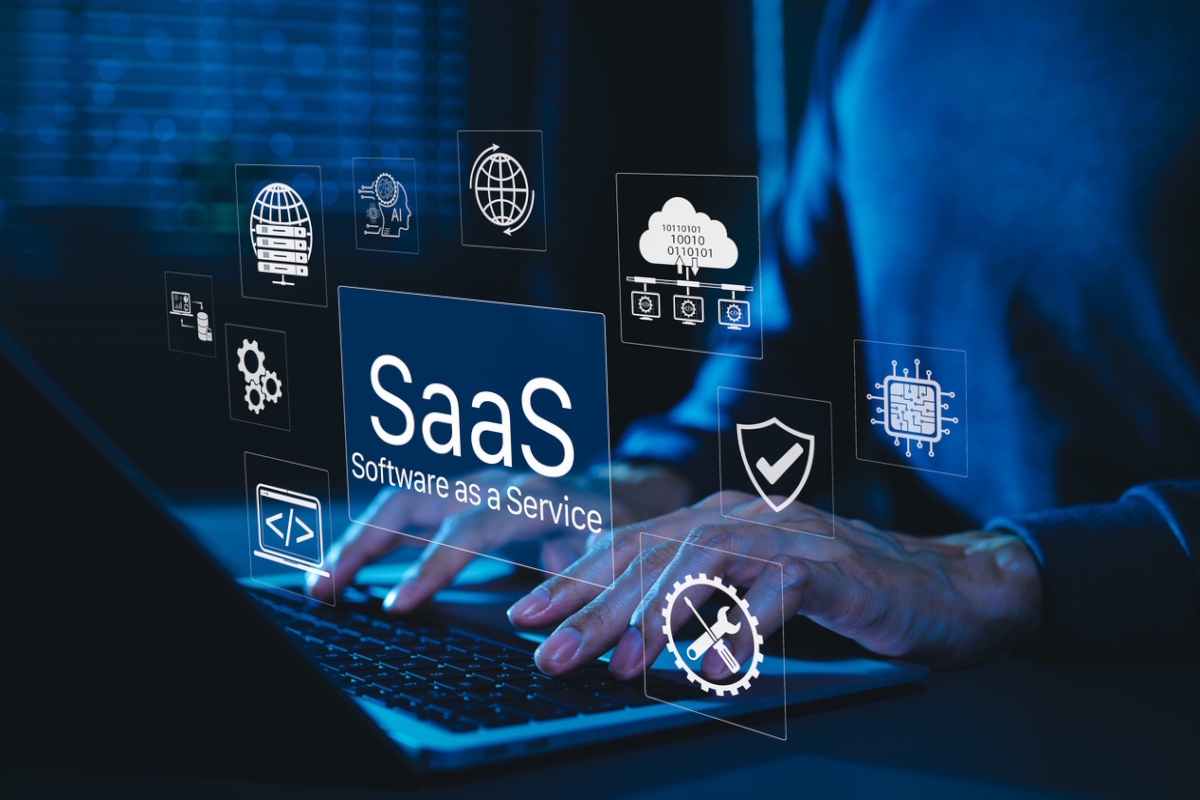
While the term ‘SaaS-pocalypse’ might sound like the title of a sci-fi film, it is clear that as AI moves closer to true autonomy, software businesses must rethink how their products are built, priced, and used.
Tools like OpenClaw are accelerating this shift, marking the point where AI moves from assisting workflows to orchestrating them. At the same time, it’s vital to recognise this transition in the AI era is still in early stages. Many of these tools are still in experimental phases, with limitations around reliability, privacy, and real-world applicability. Much like the agentic AI discourse a year ago, the hype is moving quicker than enterprise-level adoption.
Despite progress toward autonomous AI workflows, not all software companies see a potential SaaS-pocalypse as an existential threat. Large enterprises like Oracle and Salesforce have publicly pushed back on the narrative, positioning AI as an enabler rather than a disruptor of their core product offering – and have exhibited the performance metrics to prove it.
The reality most likely sits somewhere in between, with the real impact reshaping workflows and industry benchmarks, not the elimination of software platforms entirely.
User-first to agent-first infrastructure
Historically, SaaS has been designed around human users through interfaces, dashboards, and workflows. However, software is increasingly used by agents acting on behalf of people, which carries strong design implications for how platforms are built and how to cater to both human and machine use.
Instead of optimising for human interaction, SaaS companies are now optimizing design for agent-first environments, where APIs, orchestration, and machine-to-machine communication take priority over user interfaces.
More companies are turning to agents to conduct market intelligence as well. At AlphaSense, total search volumes on the platform increased 20x in the past year, as users deploy AI agents on their behalf to synthesise vast amounts of content and data at speed. Some of the largest platforms, such as Salesforce, are already adapting, with recent earnings reflecting growing demands for tools that embed AI more deeply into workflows rather than simply layering on top. Simply adding AI features or wrappers is unlikely to deliver long term success; businesses must strategically rethink how software is structured to work best with agent-driven usage.
Pricing models offer a great example of how this agent-driven usage can disrupt the status quo. Traditional per-seat models, built around human users, begin to break down when a single employee can deploy multiple agents to complete tasks that once required entire teams. As a result, pricing will move toward usage and outcome-based models, shaking up the format the industry has long relied on.
Off-the-shelf SaaS is no longer the only option
Alongside these pricing shifts, generative AI is dramatically reducing the cost and complexity of creating software. What once required dedicated engineering teams and long development cycles can now be achieved far more quickly and with fewer resources.
Enterprises are no longer limited to off-the-shelf SaaS solutions and can increasingly develop internal tools tailored to their own workflows and data. In some cases, these bespoke systems may even offer a better fit than more generic products.
That’s not to say every enterprise will, and should, opt to build-in house. However, the option of doing this introduces competitive pressure on off-the-shelf SaaS products. This is particularly challenging for generalist platforms. If a product lacks clear differentiation, whether through proprietary data, deep functionality or domain expertise, it becomes easier to replicate.
At the same time, AI-driven development is not simply reducing demand for software but reshaping it. As automation increases, so does the need for human expertise to guide and govern these systems. Demand for AI-specific technical roles is actually rising, with IT and computer-science job postings up 14.2% year-over-year in April 2026, as companies look to build and customise AI-driven tools more efficiently. This points to a more optimistic outcome: as platforms become more agent-driven, humans will continue to be crucial in building and managing these complex systems.
Rather than making software irrelevant, this shift redefines its value. Increasingly, platforms will be judged less by their interface or features, and more by the quality of the data they provide, the context they deliver, and the trust they enable.
The economics behind the SaaS-pocalypse narrative
The past decade of SaaS growth was fuelled by low interest rates, allowing companies to prioritise expansion over efficiency. As the cost of capital has risen, both investors and customers are placing greater emphasis on ROI, putting software spend under closer scrutiny.
As agents take on more workflows, ROI will increasingly depend on how securely and effectively those systems can operate. Data protection, privacy and governance are becoming central concerns, particularly as new “computer-use” tools interact more directly with enterprise systems.
Some SaaS providers have responded by restricting access and putting up barriers to prevent external agents from interacting with their platforms. While understandable, this approach carries risk. Companies cannot afford to position themselves as closed or defensive in a market that is rapidly moving towards openness and integration.
A more sustainable path is to embrace controlled access, enabling agents to operate within secure, cloud-based environments where data, permissions and usage can be governed effectively. In this model, value is not defined by limiting access, but by enabling it safely.
A more specialised, AI-native future
SaaS will not disappear, but it is entering a more specialised and demanding phase. As AI makes software more efficient and accessible, demand is likely to increase. In line with Jevons paradox, lower costs and greater capability will drive broader adoption across more users and use cases.
This is why fear-driven narratives around AI replacing humans or SaaS collapsing are short-sighted. The winners will be platforms that combine AI with trusted data and domain expertise to accelerate decisions, improve access to information and reduce blind spots. In that sense, the SaaS-pocalypse is not destruction, but the mark of a more competitive era where those who adapt will drive growth, not just efficiency.
Chris Ackerson is SVP of Product at AlphaSense
Main image courtesy of iStockPhoto.com and Supatman

Business Reporter Team
You may also like





Most Viewed


Winston House, 3rd Floor, Units 306-309, 2-4 Dollis Park, London, N3 1HF
23-29 Hendon Lane, London, N3 1RT

020 8349 4363

© 2025, Lyonsdown Limited. Business Reporter® is a registered trademark of Lyonsdown Ltd. VAT registration number: 830519543