



Thriving in a VUCA world
Heather Offord at Clarity Consultants describes how leaders can build long-term clarity in a fast-changing and unpredictable world


Hope is not a strategy.
For many leaders, the last few years have felt like a continual cycle of responding, adjusting, firefighting and trying to make confident decisions in conditions that rarely feel settled. Markets shift quickly, customer expectations change, technology moves at pace, teams want more from their employers, and economic pressure continues to influence how businesses plan, spend and grow.
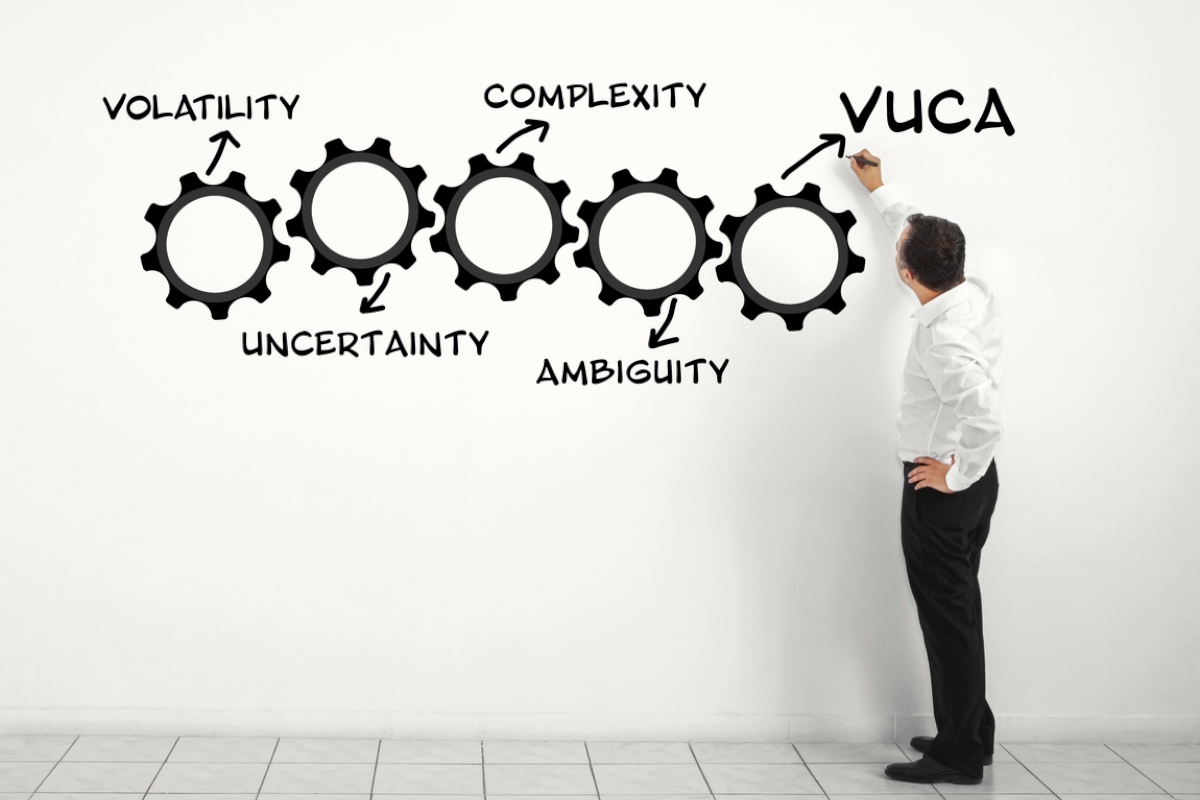
This is often described as operating in a VUCA world. Volatility, uncertainty, complexity and ambiguity are not new concepts, but they have become part of daily business life. For leaders in small and medium-sized organisations, the challenge is not simply recognising that the world is changing. Most leaders know that already. They are living it every time a cost increases, a client delays a decision or a new platform appears that everyone suddenly insists is “essential”.
Clarity
The real challenge is creating enough clarity to keep moving forward without becoming rigid, overwhelmed or distracted by every new problem, opportunity or shiny idea that lands in your inbox. Clarity is sometimes misunderstood as having all the answers. In reality, long-term clarity is not about certainty. If you are waiting for complete certainty in business, you could be there a while!
Clarity is actually about knowing what matters enough to make better decisions when certainty is unavailable.
That distinction is important. A leader who waits for perfect information will often move too slowly. A leader who acts without a clear framework risks taking the business in too many directions at once. Long-term clarity sits in the middle. It gives leaders a point of reference when conditions are changing and a way to make decisions that are aligned, considered and realistic.
One of the most common mistakes leaders make in a volatile environment is moving straight into action.
When pressure increases, it is natural to want to fix, launch, recruit, cut, pivot or invest quickly. Action feels productive. It makes us feel like we are doing something, and sometimes, doing something feels much better than sitting with the discomfort of not quite knowing what the answer is. However, action without direction can create more noise.
Long-term clarity starts with knowing what the business is actually trying to build. That sounds simple, but many organisations operate with goals that are either too vague or too disconnected from day-to-day decision making.
Growth, for example, is not a clear enough goal on its own. “We want to grow” sounds sensible, but it can mean completely different things depending on the business.
A business may want to grow revenue, improve profitability, strengthen its reputation, reduce reliance on one client base, enter a new market, build a stronger team or create more sustainable operations. Each of those ambitions requires different decisions.
When leaders are clear on the type of growth they want, they can assess opportunities more effectively. They can say yes with more confidence and, just as importantly, say no without guilt.
In a VUCA world, not every opportunity is helpful. Some simply add volume without value, and being busy is not the same as being strategic, no matter how convincing the colour-coded calendar may look.
Self-awareness
Long-term clarity also requires self-awareness.
Leaders often look externally when pressure builds. They look at the market, the economy, competitors, technology, staff challenges and customer behaviour. All of that matters…but one of the most useful starting points is understanding how they personally lead, decide and respond under pressure.
Every leader has strengths. Some are excellent at relationships and reputation building, some are strategic thinkers, and some are highly operational and can turn ideas into systems quickly. Others are strong communicators, problem solvers or innovators. However, strengths can become limitations when they are overused or left unchecked.
For example, a visionary leader may keep generating ideas without giving the team enough time to implement them. A highly operational leader may focus so much on process that they miss wider opportunities. And a relationship-led leader may avoid difficult conversations for too long because they do not want to damage trust.
Clarity comes from knowing where you are strong, where you need support and where the business may be too dependent on one person’s natural style.
In practice, this means being honest about what you should continue to own, what should be delegated, what needs external expertise and what should be built into the team over time.
Reputation
Reputation is often treated as a marketing tool, but in a VUCA world it becomes a leadership asset.
When markets are noisy, people look for trusted voices. Customers want confidence, teams want reassurance, partners want consistency and investors, stakeholders and suppliers want to understand what a business stands for and where it is going.
This is where authority matters. A strong reputation can make a business more resilient when conditions become difficult.
Businesses and leaders who have invested in visibility, trust and credibility are often better placed to hold attention, maintain relationships and create opportunities.
Leaders should be asking whether their market understands what they are known for, what problems they solve, what values influence their decisions and why people should trust them.
For SMEs in particular, authority can be a major differentiator. Larger competitors may have bigger budgets, but smaller and mid-sized businesses often have the advantage of personality, agility and closeness to their customers.
The leaders who communicate clearly and consistently can turn that into a strength. This means being intentional about how you show up, what you say and whether your audience can understand the value you bring.
Complexity
Complexity is one of the hardest aspects of modern leadership because it can make everything feel equally important.
Sales, marketing, recruitment, operations, cash flow, technology, compliance, culture, customer experience and innovation all compete for attention. Add in inboxes, meetings, reporting, staff questions and someone asking whether the business should be using a new piece of software no one has budgeted for, and it is no wonder leaders feel stretched.
The reality is that businesses are complex, people are complex and growth is complex. The answer is to translate complexity into priorities.
A useful question for leaders is: What needs to be true for the next stage of growth to work? That question forces a business to move away from scattered activity and towards practical sequencing.
Ambiguity
Ambiguity can be especially uncomfortable because it asks leaders to make decisions without a perfect answer. There may be information, but not enough. There may be feedback, but it may be mixed. There may be an opportunity, but also a risk. There may be several possible routes and no obvious “correct” one.
This is where values, goals and priorities become essential.
A clear decision-making framework helps leaders avoid reacting to pressure alone. This may involve asking:
- Does this support our long-term direction?
- Do we have the capacity to deliver it well?
- Will this strengthen or weaken our reputation?
- Does it improve the customer experience?
- Is it financially realistic?
- What will we have to stop, delay or delegate if we say yes?
In a VUCA world, leaders will not always know what will happen next. However, they can know what they are measuring decisions against. That creates steadiness, even when the external environment is moving quickly.
Long-term clarity
Businesses need regular space to step back and ask what has changed, what has worked, what is no longer relevant and what now needs attention.
This is particularly important for SMEs, where leaders are often close to the day-to-day running of the business and may not have the same strategic breathing space as larger organisations. A good growth plan should be structured enough to guide decisions, but flexible enough to respond to reality, and should help leaders stay focused without becoming fixed.
The aim is to create a clear route forward and keep adjusting it with intention.
That is where many businesses go wrong. They either avoid planning because things change, or they cling to a plan long after it has stopped making sense. Neither approach is particularly helpful.
In volatile, uncertain, complex and ambiguous conditions, clarity helps leaders communicate better, prioritise more effectively, build stronger teams, protect capacity and make decisions that are rooted in purpose rather than panic.
It gives businesses a stronger foundation when the external environment is unpredictable.
The leaders who will navigate the coming years best will be the ones who understand where they are going, what they stand for, where they need support and how to keep making aligned decisions when the path is not entirely clear.
Certainty may be impossible to guarantee…but clarity is still something leaders can build, and I believe that in a VUCA world, that clarity may be one of the most valuable things a business has.
Heather Offord is a Director of Clarity Consultants Ltd and author of The Growth Compass
Main image courtesy of iStockPhoto.com and kemalbas

Business Reporter Team
You may also like





Most Viewed


Winston House, 3rd Floor, Units 306-309, 2-4 Dollis Park, London, N3 1HF
23-29 Hendon Lane, London, N3 1RT

020 8349 4363

© 2025, Lyonsdown Limited. Business Reporter® is a registered trademark of Lyonsdown Ltd. VAT registration number: 830519543