



Promoting the benefits of change
Author and transformation specialist Amale Ghalbouni describes why teams are becoming increasingly change-averse


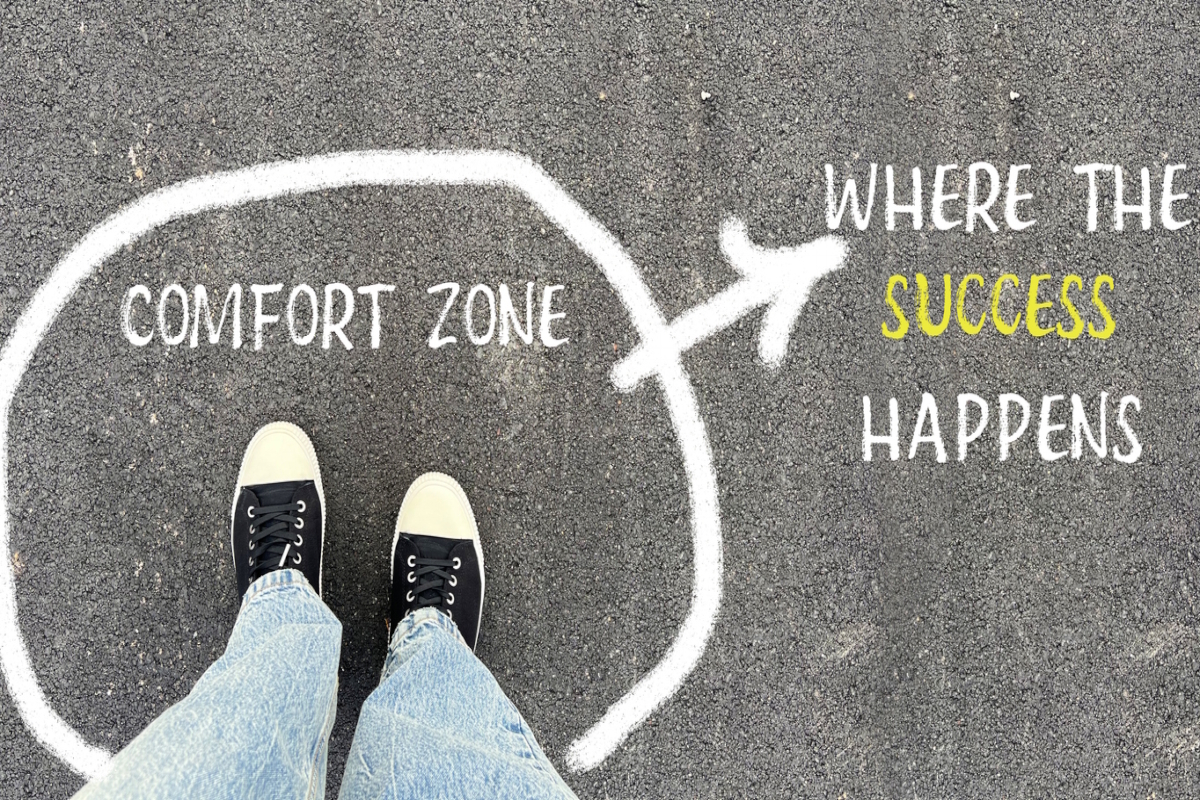
For many organisations, change used to arrive in cycles.
A new strategy every three years. A restructure after a merger or leadership shift. A systems rollout to become more customer-centric or data-driven.
Now, change feels less cyclical and more constant.
AI and technological disruption are shifting markets, customer expectations and working practices faster than many teams can absorb. Priorities are shifting week by week. AI pilots are appearing faster than teams can process. Transformation programmes are overlapping with hiring freezes and cost controls, adding confusion to the mix.
Teams are being asked to change while already stretched, burned out and, quite often, fearful of the next round of redundancies.
So when leaders see people slow down, avoid decisions, ask for more certainty or wait to be told what to do, it’s tempting to label them as change resistant.
But in many cases, teams are responding to the conditions around them. They’re showing signs of what I call in my book, Experimental, the Big Freeze.
The Big Freeze happens when the environment around a team makes action feel harder and more expensive than standing still. People stop showing initiative and hold back what they really think. They become careful, compliant and cautious at the exact time their organisation needs them to be fast, creative and adaptive.
The Big Freeze is becoming more common
The pace of change is now outstripping people’s capacity to absorb it.
Microsoft’s 2025 Work Trend Index described a clear “capacity gap”: 53% of leaders said productivity needed to increase, while 80% of the global workforce said they lacked enough time or energy to do their work. The same report found that employees are interrupted, on average, every two minutes during the working day.
And change requires attention. People need space to understand what’s shifting, what it means for their role and what the implications look like in practice right now.
Without that space, every new initiative becomes another demand layered on top of an already overloaded system.
Gallagher’s 2025 Employee Communications Report found that low capacity, change fatigue and poor people manager communication were among the most challenging barriers to success, with 44% of HR leaders identifying change fatigue as a key battleground.
This is where the Big Freeze takes hold.
Teams delay decisions because they don’t know what matters most. They stop challenging assumptions because it feels safer to follow the process. They become less creative because creativity takes cognitive space.
The hidden cost is more activity, but less real progress. To reverse that, leaders need to work on the conditions around the team, not just the change plan itself.
Three moves to get teams out of the Big Freeze
The opposite of the Big Freeze is Free Flow: the state where people take autonomous action with confidence, learn as they go and adapt without waiting for perfect certainty. Everything may still feel messy. People may still disagree. But the team has enough trust, clarity and agency to keep moving.
1.Lean on human connection in this age of AI
In change-fatigued teams, people hold back. They don’t ask the awkward question. They don’t admit confusion. They don’t flag what feels unclear or unlikely to land well, because they fear being labelled difficult or negative.
Leaders can ask: what are you carrying that I might not be seeing? What feels unclear, unrealistic or hard to say? What are we pretending is fine?
Leaning on our humanity as leaders matters more than ever. It starts with knowing, understanding and trusting each other enough to say the difficult thing out loud.
2. Create clarity before asking for speed
When everything feels equally urgent and important, nothing gets done.
Leaders should be able to answer three questions in plain language: where are we going? What matters most right now? What are we not doing?
If leaders keep adding priorities without naming what can pause, slow down or stop, teams hear: “Do all of it, faster.” Clarity gives people a frame for decisions when the leader isn’t in the room. It also reduces the cognitive load that comes with competing priorities.
3. Celebrate learning, not just outcomes
Many organisations celebrate launches, wins and big announcements. Far fewer make space to process what was learned along the way.
In Experimental, I talk about celebration as the practice of making learning visible. If teams never talk about what worked, what failed and what needs to change next, they keep paying for the same lessons in different ways.
Leaders can ask: what did we learn? What should we repeat? What should we stop doing? What do we know now that we didn’t know 30 days ago?
This helps teams build confidence through evidence, rather than relying on optimism. When learning matters as much as the final outcome, change feels more survivable. Teams can focus on learning faster, rather than needing every move to work the first time.
The rate of change is unlikely to slow down.
The better question is: how do we create the conditions where change is easier to absorb, act on and bounce back from?
Teams become change-averse when they’re asked to adapt without the capacity, clarity or control to do it well. Leaders who understand that will be better placed to move their teams out of the Big Freeze and into Free Flow.
Amale Ghalbouni is the founder of The Brick Coach and author of Experimental: The Restless Leader’s Field Guide For Building High Performing, Change-Ready Teams
Main image courtesy of iStockPhoto.com and bmanzurova

Business Reporter Team
You may also like





Most Viewed


Winston House, 3rd Floor, Units 306-309, 2-4 Dollis Park, London, N3 1HF
23-29 Hendon Lane, London, N3 1RT

020 8349 4363

© 2025, Lyonsdown Limited. Business Reporter® is a registered trademark of Lyonsdown Ltd. VAT registration number: 830519543