



Mobile wallets and multi-channel spending
Alex Mifsud at Weavr considers whether mobile wallets will finally connect digital journeys to real-world spend


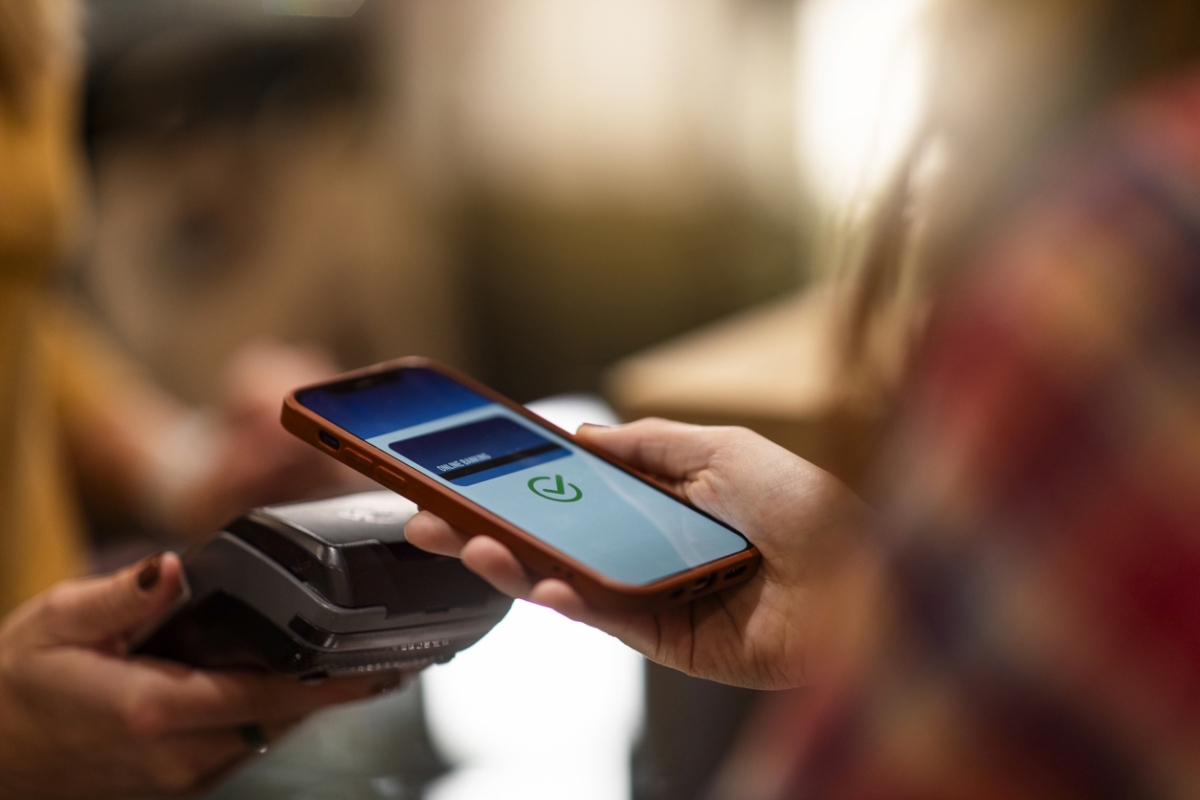
For more than a decade, Apple Pay and Google Pay have been quietly rewriting consumer behaviour in physical retail. What began as a cool way to pay evolved into a convenience and has now become the default. Tap your phone, walk out, done. In the UK alone, digital-wallet transactions have risen from 8 per cent of all card payments in 2019 to 29 per cent in 2023, totalling over 9 billion transactions.
Yet for all the progress in payments, some of the sectors most desperate for friction-free offline experiences - loyalty, gifting and Buy Now Pay Later (BNPL) - remain stuck in an earlier era of plastic cards, codes, manual checks and point-of-sale contortions that break the very engagement they are meant to encourage.
This tension is now impossible to ignore. Digital-first loyalty platforms have perfected the online experience with rich UX, instant balances and personalised rewards - only for the in-store journey to grate with the familiar friction of scanning barcodes, digging out loyalty cards or hoping a shop assistant knows how to redeem a reward.
Gifting and mall incentives are even more fundamentally constrained: fulfilment still often relies on plastic gift cards, redemption rules vary by store, operational overhead is high due to code leakage and fraud risk, and recipients are uncertain whether their gift will work at checkout. BNPL, which reshaped online conversion rates and basket sizes, has barely scratched the surface in physical stores - because most BNPL providers cannot issue a certified, universally accepted tap-to-pay instrument that works at existing terminals.
Underneath these issues lies a shared structural flaw. While digital engagement has advanced dramatically, the physical point of sale is still treated as a separate universe. Loyalty, gifting and financing are handled as add-ons rather than intrinsic elements of the buying journey. The result is suppressed redemption, poor attribution, fragmented brand touchpoints and customer experiences that fail to match modern expectations.
In Europe, many consumer businesses still operate loyalty, promotions and pricing as separate systems, resulting in disjointed experiences. Meanwhile, retail loyalty redemption rates typically land between 40 and 60 per cent, with digital-first programmes often below 30 per cent. In a world where consumers expect everything to be instant, mobile native and seamlessly integrated, these offline gaps look increasingly outdated.
A ready-made solution
The irony is that the infrastructure to close this divide already exists. Mobile wallets have become the most widely understood, universally accepted retail technology available. European consumers overwhelmingly adopt them for ease: 71 per cent cite faster, simpler checkout as a primary reason for using digital wallets.
An app that can push provision cards to Apple Pay and Google Pay wallets is an extraordinarily rich and deeply personalisable engagement platform with unmatched ability to respond to context such as location, time of day, weather and of course personal and behavioural data. Add to this the fact that acceptance at retailer tills requires no staff retraining, no new hardware, no PoS integration work and no extra consumer education. If you can tap your phone to buy a coffee, you can tap it to redeem loyalty points, spend gift value or complete a BNPL transaction.
The rails are already there. What has been missing is the connective tissue between digital engagement systems and mobile-wallet-native payments.
This too-good-to-be-true platform has already achieved mass-market adoption, yet remains practically unexploited by retailers and the vendors that serve them. We predict that this is where the next wave of retail innovation will take shape. The ability to issue virtual cards that are instantly provisioned into Apple Pay or Google Pay, and restricted to specific merchants or categories, is transformative - not just for payments teams, but for product builders in loyalty, incentives and financing.
Consumers are already signalling demand for this convergence: 55 per cent say redeeming rewards directly at checkout is essential or very important. Shifts of that magnitude only occur when a technology begins to solve longstanding operational and customer-experience issues at the same time.
It pays to be loyal
Loyalty offers the most visible example. Much of the loyalty value that consumers earn never gets redeemed - not because customers do not care, but because the process is tedious. Points sit in an app that bears no relation to the moment of checkout. Redemption often requires a code, a plastic card or an awkward interaction with staff.
But consider the alternative: a customer earns points online, and the balance is held behind a virtual card already in their mobile wallet. When they walk into a store, they tap to pay as normal, and the rewards apply automatically because the card is restricted to that retailer, with any supplementary payment charged to a credit card that the customer will have pre-registered. No plastic. No codes. No staff intervention. Just a redemption experience that feels native to how people already pay.
The most valuable loyalty programmes are not those that accumulate points, but those that make redemption effortless. Mobile-wallet-native loyalty finally delivers on that promise.
BNPL faces an equally clear but structurally different barrier. Online, the experience is smooth and instantaneous. Offline, it breaks down because most lenders cannot issue a real-time, merchant-specific payment credential that is compliant, secure and accepted across terminals.
Apple Pay and Google Pay change this by acting as the distribution channel for one-time virtual cards. A consumer is approved for BNPL, receives a card provisioned directly into their mobile wallet, and taps to pay at the till. The transaction routes exactly like any other card payment - with no PoS integration, no additional checkout steps, no staff involvement. The result is a BNPL experience that becomes channel-agnostic: it works online, it works offline, and it unlocks a much wider retail opportunity. With mobile’s location awareness, BNPL offers can be highly targeted and matched to the stores that wish to promote them.
Gifting and shopping centre incentives may be the most overlooked opportunity of all. Despite their scale, traditional gift cards remain burdened by physical fulfilment, inconsistent acceptance, breakage, fraud vulnerability and operational overhead.
These problems all stem from the same underlying flaw: the redemption mechanism is not aligned with how people nowadays pay. Replace plastic cards with digital value delivered through a mobile wallet, working at every existing terminal without any change to store infrastructure, and the friction disappears. Recipients spend the balance by tapping their phone. Retailers receive settlement in real time. Mall operators get clean redemption, consistent attribution and reduced operational burden. And consumers gain a simple, modern way to redeem value across stores with no uncertainty about acceptance.
The most compelling part of this shift is that it solves problems for every stakeholder in the chain. Consumers get simplicity and familiarity. Retailers avoid PoS changes, split tenders and operational overhead. Platforms in loyalty, BNPL or incentives can finally connect digital engagement to in-store spend in a way that feels natural. It is simply leveraging the rails consumers already trust and use daily.
In practice, the organisations that will lead this next phase will be those that view Apple Pay and Google Pay not merely as checkout features, but as distribution channels for precisely controlled payment credentials. That is how we frame the problem: the innovation is not in the wallet itself, but in the controlled virtual cards that sit behind it. When digital journeys are tied directly to real-world spend through the mobile wallet, businesses finally unlock the conversion, attribution and customer satisfaction that legacy loyalty, gifting and financing models have consistently failed to deliver.
The future of payment adjacency
The bottom line is straightforward. The final frontier in offline commerce is not payments themselves - payments are already solved. The real frontier lies in everything adjacent to payments: rewards, incentives, financing and aftercare. These systems have modernised online, but remain disconnected offline.
Mobile wallets offer the connective layer they have been missing. If businesses embrace them as the universal redemption and spend mechanism they are capable of being, the next wave of innovation will not be about how people pay - but how seamlessly the digital and physical worlds finally interact.
Alex Mifsud is CEO at Weavr
Main image courtesy of iStockPhoto.com and mihailomilovanovic

Business Reporter Team
You may also like



Most Viewed


Winston House, 3rd Floor, Units 306-309, 2-4 Dollis Park, London, N3 1HF
23-29 Hendon Lane, London, N3 1RT

020 8349 4363

© 2025, Lyonsdown Limited. Business Reporter® is a registered trademark of Lyonsdown Ltd. VAT registration number: 830519543