



Great strategy…but can your people execute it?
Strategy is Why organisations act the way they do. But the Why can’t work without the How. Nelson Sivalingam at HowNow explains


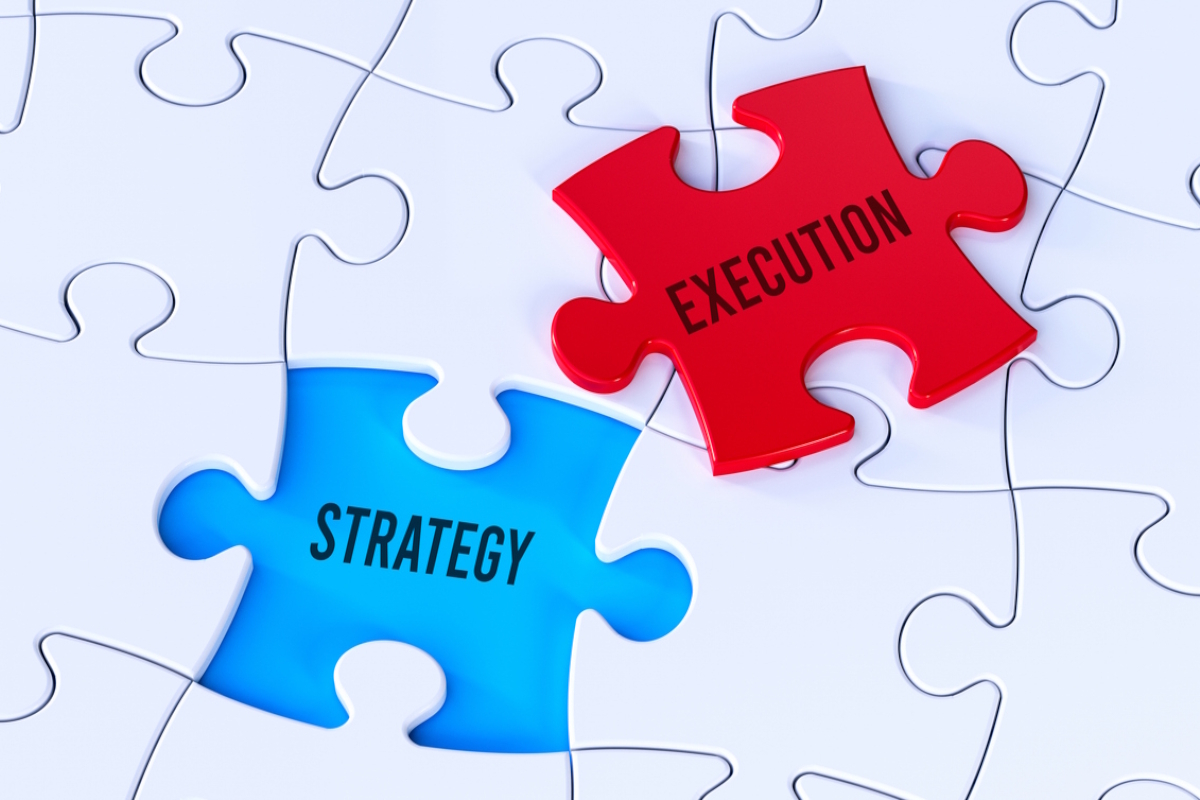
Leaders can see the edge. While most of us are huddled in the crowd, able only to see a piece of the puzzle, it’s a leader’s job to take the broader view. Organisation; market conditions; technological change: the environment informs the strategy. Clear articulation of the strategy helps people managers to craft objectives for themselves and their teams. Everyone understands what they’re doing and why.
Strategy, then, is the all-important Why. But the Why can’t work without the How. Here’s where we need to go, and the reasons for it. So how do we go about it?
Execution is the How, and it’s where things tend to fall down. Sometimes that’s the fault of the strategy - it was poorly articulated, perhaps, or failed to take specific roadblocks - technical, cultural - into account. But it’s far more likely to be a failure of execution. Is it clear to you precisely which skills you need to deliver this? Do your people have the knowledge and ability to get it done? Strategy is about change - not just for your business, but for those working to execute it. The skills that have served them so far might not be the ones they need for the next step. And if that’s the case, all those great ideas will never come to fruition. The path to delivery will be blocked.
Find insight in the fine details
Execution is subject to the same pressures we experience when writing the strategy. The market can evolve. Technology can move on. And yes, employees can adapt too - if they have the skills to cope with that shift. So just how clear a picture do you have of the skills within your organisation? Do you understand what you have, what you need and how to get there?
Skills are the currency by which people achieve their objectives and adapt within their boundaries. Skills development means quicker adoption of new, time-saving tech. It means adapting more readily to changes in the environment - a key competitor pivoting and presenting you with new problems to solve, for example. Skills create a resilience behind the How: the confidence that comes with knowing that your people have the capability to adapt and finesse their route to the Why. If strategies are fundamentally about transformation, that implies a more agile approach. You need iterative execution - execution which tests and learns, which requires new perspectives and approaches. If you lack a strong skills base, allied to a clear pathway for continued and continuous skills growth, then you’re sending people into the unknown. And yes, we could argue that the strategy is a roadmap. But skills are the compass and driving licence: the means by which we navigate the journey.
Apply insight to delivery
Creating a skills gap analysis is the first step. And although this exercise may haunt its fair share of L&D professionals thanks to its time - and resource-intensive reputation, it’s not the uphill slog it once was. Gaining true clarity over skills gaps can be done in days rather than weeks or months thanks to AI-enabled learning tools, which can simultaneously crunch information from internal reviews and performance data with job market information to create a clear picture of what you have and what you need (now, and in the future). Which roles are your competitors hiring for, and how is that evolving? How long would it take for you to bring an existing team member up to the level you need, and what would the cost be of hiring someone new instead? To take AI as a topical example: is it enough to have a team using enterprise AI tools, or do you need a cohort of people capable of coding their own agentic AI? This sort of clarity removes the guesswork from the equation. You gain a clearer understanding of which resources you have and which you’ll need: deployment becomes a matter of information, not instinct.
Without this clarity, bottlenecks are inevitable. According to Harvard Business School’s Robert Kaplan, 90% of organisations fail to execute their strategies successfully. Skills shortages slow everything down. Hiring may struggle to keep up with demand (not to mention the inherent cost challenge in recruiting people in a highly in-demand discipline). The grand strategy launch, with its carefully crafted communication and intricate layering of goals, stutters and stalls. Momentum is lost. Inertia sets in.
Know what you don’t know
In an ideal world, everyone would have precisely the skills they needed to do their job perfectly and to excel in an evolving market. We don’t live in that world, but we can recreate some of the conditions for it. Just as the right tool can show you exactly the skills you have available and the skills you’ll need to deliver on your big Why: it can help you craft the How. Individual, tailored, curated learning pathways for every single person in your organisation, calibrated to bring them up to the level they and you need to succeed. One-to-one coaching, delivered at the point of need and in the flow of work. Real-time updates on progress and development, ensuring that any disconnect between strategic vision and capability is addressed in a timely way.
Many of the most famous cases of business failure - the Kodaks, the Blockbusters - came about in large part because the businesses in question didn’t know what they didn’t know. New technology caught them off guard before they could pivot. Granular, real-time skills and market data weren’t, perhaps, available to them in the way they are now. We have no such excuse. It’s both cost-effective and quick to create a clear, evolving and accurate view of the skills you have and the skills you’ll need. And if strategic planning is the organisation’s brain, the skills of its people are its hands, eyes and ears. We all understand the importance of giving employees the resources they need to achieve and excel. Surely skills - without which we could not integrate and master new tech - are the most vital resource of all. Delivering change and transformation is always a huge challenge. The more you know and understand, the more likely you are to succeed.
Nelson Sivalingam is the Co-Founder and CEO of HowNow - the intelligent learning and upskilling platform, the author of award-winning book Learning at Speed, and co-host of the L&D Disrupt podcast
Main image courtesy of iStockPhoto.com and narvo vexar

Business Reporter Team
You may also like






Most Viewed


Winston House, 3rd Floor, Units 306-309, 2-4 Dollis Park, London, N3 1HF
23-29 Hendon Lane, London, N3 1RT

020 8349 4363

© 2025, Lyonsdown Limited. Business Reporter® is a registered trademark of Lyonsdown Ltd. VAT registration number: 830519543