



Rethinking manufacturing: the case for onshoring production
For decades, manufacturers offshored production to save on labour, materials and costs. However, recent global disruptions, such as tariffs, long lead times and logistical challenges, have driven many to rethink this approach. Onshoring, which means shifting production closer to the end market, is increasingly viewed as a strategic way to enhance supply chain resilience and improve operational agility.
“The pace of change in manufacturing is accelerating, and the traditional ways of managing production and supply chains simply aren’t enough,” says Jeff Kinder, EVP Product Development and Manufacturing Solutions at Autodesk. According to data cited by Forbes in early 2024, 69 per cent of US manufacturers had begun reshoring their supply chains, with 94 per cent of those reporting success.
The CIMdata 2025 CAM Market Analysis Report also reinforces this shift: “Manufacturers in North America and Western Europe have recognised that […] supply chains and stock levels as well as logistical costs benefit from basing manufacturing close to consumers.”
The switch to onshoring often involves a comprehensive business model overhaul, including facility expansion, local labour sourcing and optimising manufacturing processes. It requires time, budget and strategic vision.
Examining offshoring versus onshoring
Offshoring often promises lower costs per part due to more affordable overhead production costs. However, those savings can be offset by less obvious challenges. Common hurdles include long lead times, large minimum order quantities and limited protection for intellectual property. Time zones and language barriers add complexity, while unprecedented global events such as the Covid-19 pandemic highlight supply chain volatility.
By comparison, onshoring – particularly manufacturing products in-house when possible – offers several tangible, long-term advantages:
- Shorter lead times: domestic manufacturing can shift delivery timelines from months to days or even hours
- Easier protection of intellectual property: keeping design and production within the same company strengthens control over innovation
- More flexible order sizes: companies can produce small product batches in-house or outsource to affordable domestic vendors (such as SendCutSend or Xometry)
- Faster problem-solving: if a flaw appears during manufacturing, the engineering team can immediately collaborate with the manufacturing team to address it
- Stronger supply chain resilience: while some materials may come from abroad, manufacturing locally improves resilience in the face of unpredictable global events
Bringing design and manufacturing in-house with digital tools
With offshoring, companies outsource responsibilities such as labour sourcing, factory management and machine maintenance to external vendors, often overseas. Onshoring, however, means taking on those logistics internally or via vendors closer to home. Fortunately, digital tools now make training and upskilling local workers more manageable.
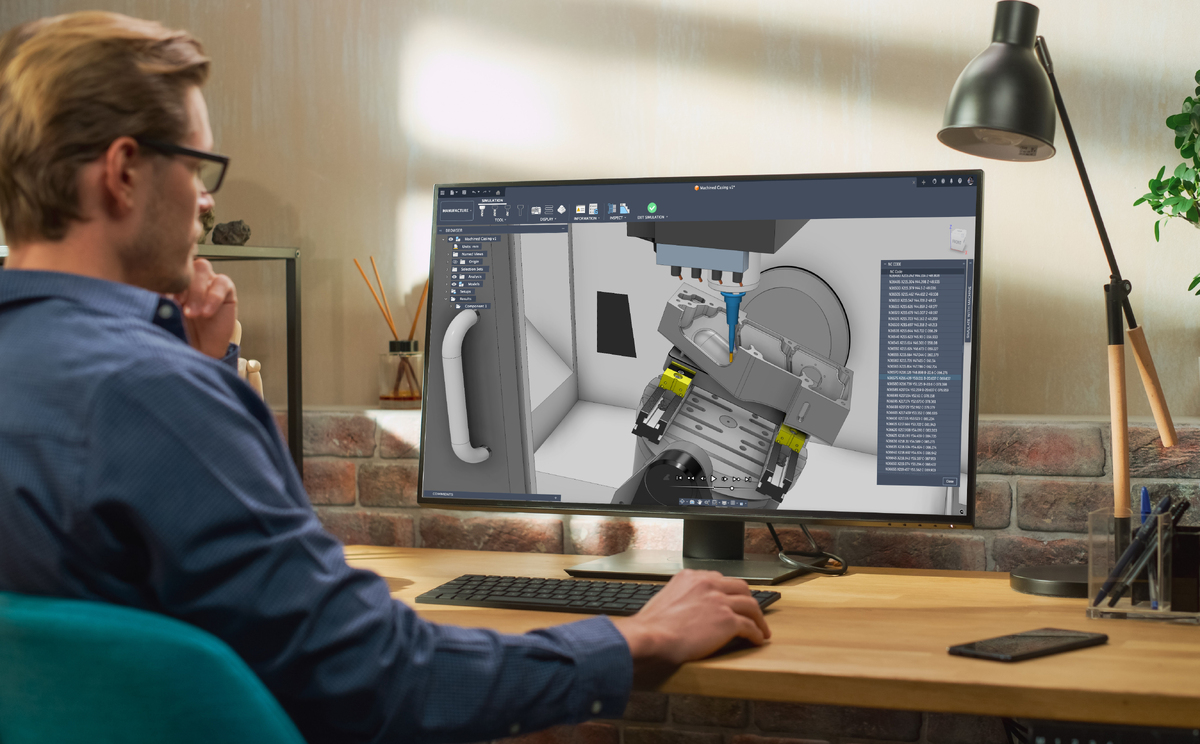
Companies exploring onshoring increasingly turn to cloud-based solutions such as Autodesk Fusion, which offers features designed to optimise local product design and manufacturing processes. The software itself provides a unique platform that combines both CAD and market-leading CAM tools in a single platform. “Onshoring is more than a shift in geography,” says Kinder. “It’s a strategic transformation that empowers manufacturers to harness digital innovation, AI and cloud collaboration.”
With 95 per cent of its operations handled in-house, UK-based Hawk Furniture has embraced Fusion to boost efficiency. The team can easily create bespoke designs and streamline sheet-metal work that now saves them a day and a half in testing. “It doesn’t matter what department you’re in, whether it’s the designers, someone coding, someone on the shop floor, or the directors,” says Hawk Furniture’s design engineer Ben Tilford. “Anyone can get the information they need.”
Connecting people, processes and data
When it comes to onshoring, product lifecycle management (PLM) is also imperative to connect all data, from engineering to supply chain management, and ensure everyone works from a single source of truth.
India-based company Ecozen uses Fusion Manage as its PLM system to centralise the data behind producing its solar-powered equipment. “Early on, implementing Fusion Manage as our PLM solution was a smooth and structured process,” says Devesh Yadav, Assistant VP of Technology and Design at Ecozen. “We were able to roll it out and onboard our teams within just two quarters.”
Streamlining the factory floor with real-time analytics
Onshoring manufacturing also requires a reboot of the actual factory floor. A manufacturing execution system (MES) such as Fusion Operations enables engineers and production teams to digitalise scheduling, workflows and resource management with access to real-time analytics.
After years of relying on manual tracking for more than 14,000 SKUs, American manufacturer Lowe Hardware adopted Fusion Operations as its manufacturing execution system (MES) to unify production data, scheduling and order visibility across its growing business.
It now has complete transparency into every step of manufacturing, reducing back orders from 36 per cent to just 10 per cent in six months. “In my mind, the production floor should mimic how things flow through Fusion, Fusion Operations and the different stages of the project,” says Elliot Lowe, Principal at Lowe Hardware.
Future-proofing manufacturing with the right tools
Onshoring may seem challenging, but it future-proofs businesses against shifting industry demands. With the right tools, manufacturers can enhance product quality, reduce costs, and respond rapidly to change. “By rethinking how we design and make, businesses can build resilience, unlock new opportunities and stay ahead where adaptability is key to long-term success,” says Kinder. The seamless integration of Fusion, Fusion Operations and Fusion Manage supports companies of all sizes in making onshoring and improved business outcomes a reality.
By Aishwarya Balamukundan, Senior Director of Marketing, Design and Manufacturing, Autodesk


Business Reporter Team
You may also like






Most Viewed


Winston House, 3rd Floor, Units 306-309, 2-4 Dollis Park, London, N3 1HF
23-29 Hendon Lane, London, N3 1RT

020 8349 4363

© 2025, Lyonsdown Limited. Business Reporter® is a registered trademark of Lyonsdown Ltd. VAT registration number: 830519543