



How AI and agentisation are safeguarding margins in volatile markets
Sponsored by Trans.eu Group



For decades, the global supply chain was a race to the bottom on cost, and efficiency was the only metric that mattered.
But as we move towards the 2030 horizon, the landscape has shifted. A volatile mix of geopolitical friction, the near-shoring of production to Eastern Europe, and aggressive decarbonisation targets have forced the global transport and logistics (TSL) sector to face a redefinition of what it means to be resilient.
In this context, it is no longer just about resisting disruptions, but a strategic capability linked to operational intelligence. To protect margins in this high-inflation era, supply chain management is replacing its just-in-time philosophy with a new imperative: risk management.
New transport flows, old problems
To mitigate the risks of global disruption, we are witnessing a structural shift in the continent’s industrial geography: enterprises are increasingly moving production centres to Central and Eastern European hubs. Poland, Romania and the Czech Republic have become the new engine rooms of the EU.
Near-shoring attempts to reduce geographical distance but introduces a major new instability: a severe lack of capacity. This is driven by a structural labour collapse, specifically a driver shortage that the International Road Transport Union (IRU) projects will reach two million by the end of 2026. This crisis, combined with green inflation, where new CO2 tolls are causing cost surges of up to 80 per cent on major routes, has transformed transport into a massive financial drain.
As European supply chains reconfigure and new trade flows emerge across the continent, the uncertainty gap, where capacity disappears and costs spike without warning, is where enterprise margins go to die. Therefore, the ability to find the right capacity on any corridor, in real time, becomes a decisive competitive advantage that from now on only an AI-powered platform supported by a big network of verified transport companies will be able to provide.
The rise of the logistics agents: from assistance to autonomy
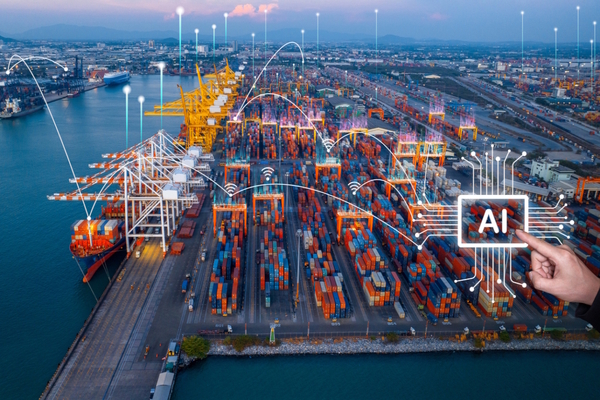
We have reached a decisive technological frontier. While the last decade was defined by digitalisation, moving from paper to screens, the next years will be defined by agentisation. AI technology and processes optimisation with data will allow us to create a digital network capable of autonomously navigating chaos, rather than merely observing it.
Until now, we could use AI to take repetitive tasks off the plate of dispatchers and planners, allowing them to focus on strategic decisions and customer relationships. But now AI agents are moving from assisting to acting on behalf of users. For instance, negotiation agents can manage rate discussions, while verification agents cross-check shipment information and partner compliance to ensure faster, more trustworthy decisions.
Predictive models are already a reality too: designed to turn data into foresight, helping users anticipate cost fluctuations and plan proactively rather than react to market shocks. The same data also powers the ability to reduce empty runnings, one of the highest-impact levers in both cost optimisation and freight decarbonisation.
Digital transport platforms powered by data
The resilience of the global supply chain rests on three essential pillars: capacity, connectivity and trust.
We have already established the ability to access a verified digital-ready network of carriers is the new currency in the new European landscape. Enterprises can no longer rely on a “call-around” strategy; when production spikes, the wheels must be already moving.
Trust is what holds the entire system together. A network is only as strong as the reliability of its participants. Verified carriers, transparent transactions and secure data exchange are the foundation that makes agentisation possible. Without trust, AI agents cannot make autonomous decisions on your behalf. With it, they become your most valuable operational asset.
The most significant drain on enterprise margins isn’t the cost of fuel, it’s the cost of silence. Real-time communication prevents empty miles and dock bottlenecks. When systems share information properly, every stakeholder sees a single version of the truth: no data silos, no guesswork and, as a consequence, more reliable transactions for all the parties involved.
None of the above would be possible without connectivity and real-time information processing between the different systems and actors. Fragmented digital solutions fail because they lack the co-ordination needed across planning, execution and settlement.
Therefore, the market is shifting towards integrated, platform-based co-ordination models, combining capacity access, operational control and risk management.
The 2030 vision: intelligence as infrastructure
As we look towards 2030, the logistics industry is becoming a “digital brain” that orchestrates complex flows across the continent. Competitive advantage will belong to those with the most intelligent networks. By identifying patterns, from seasonal shifts to the ripple effects of regulatory changes such as the EU’s ETS2, this predictive foresight will turn data into the ultimate tool for resilience.
Agentisation represents a unique opportunity to resolve the transport industry’s most persistent challenges: unpredictable capacity, volatile pricing and security gaps. When multiple agents work together – one optimising capacity allocation, another managing dynamic pricing, a third ensuring compliance and security – they can identify solutions that benefit all parties. This is how we move from zero-sum negotiations to genuine win-win decisions.
The future of European freight is no longer just about moving cargo; it is a seamless, self-optimising flow that thinks, learns and adapts in real-time. And that only works when the network itself is solid, with verified partners, real connectivity and trust as the foundation.
To find out more, please visit www.trans.eu
By Ewa Węgorkiewicz, Chief Commercial Officer, Trans.eu Group


Business Reporter Team
You may also like




Most Viewed


Winston House, 3rd Floor, Units 306-309, 2-4 Dollis Park, London, N3 1HF
23-29 Hendon Lane, London, N3 1RT

020 8349 4363

© 2025, Lyonsdown Limited. Business Reporter® is a registered trademark of Lyonsdown Ltd. VAT registration number: 830519543