



Swiss army knives: the ideal CEOs
Author and governance consultant Edward Rowe explains why generalists make the most effective CEOs

Modern business has become increasingly specialised. Finance leaders focus on capital allocation and reporting. Technology leaders focus on systems and infrastructure. HR leaders focus on culture and talent. Operations leaders focus on efficiency and execution. Every function has developed its own language, priorities, metrics, and expertise.
This specialisation has undoubtedly made organisations more capable. But it has also created a subtle problem: many businesses are now led by executives who historically have deeply understood one part of the organisation but are not used to seeing how the entire system fits together.
That becomes particularly dangerous for specialist CEOs, as they need to lead an entire enterprise.
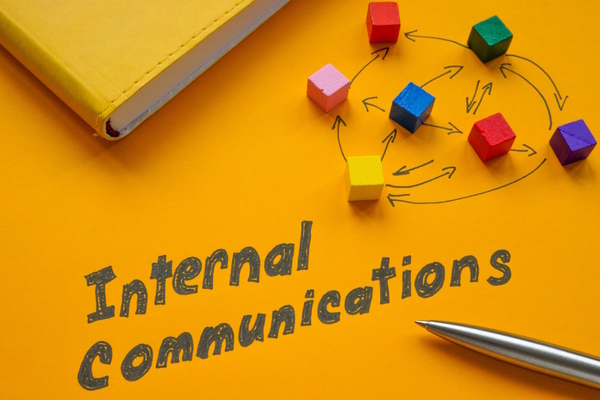
Enterprises are not collections of independent departments; they are interconnected systems where decisions made in one area affect another. A pricing decision affects sales. A growth strategy affects operations. Cost reductions influence culture. Procurement decisions influence risk. Technology investments affect customer experience.
This is why the most effective CEOs often resemble generalists more than specialists. Not because they lack expertise, but because they have developed the ability to integrate expertise across the organisation. They join the dots.
In many ways, the best CEOs operate like Swiss army knives. They may not be the deepest technical expert in every discipline, but they possess enough breadth across multiple areas to understand trade-offs, connect ideas, align teams, and make balanced decisions in conditions of uncertainty. Their skillset is broad, and they can draw upon these varied skills depending on the situation. Just like a Swiss army knife, there is a tool for each situation.
That capability and breadth are becoming increasingly important in a more complex corporate world.
Historically, organisations have rewarded deep functional expertise as the primary route to senior leadership. In many cases, exceptional specialists rose through the ranks because they consistently outperformed within their domain. The best salesperson became Head of Sales. The best engineer became CTO. The best accountant became CFO.
But the transition from functional leadership to enterprise leadership is significant. Leading a function requires optimisation. Leading a company requires the ability to align several functions, with competing requirements and priorities.
This is where many otherwise talented executives may struggle. A leader who has spent an entire career within one discipline can unintentionally view the organisation through that lens. Financial leaders may over-prioritise efficiency at the expense of innovation. Commercial leaders may drive aggressive growth without sufficient operational scalability. Technical leaders may focus heavily on product capability while underestimating market positioning or customer adoption.
None of these perspectives are wrong in isolation. The issue is imbalance.
Businesses rarely fail because one function is completely incompetent. More often, they fail because functions become misaligned. The role of the CEO is therefore not simply to drive performance within individual departments, but to ensure the organisation operates cohesively as a whole.
The best CEOs typically develop what might be described as ‘enterprise fluency’. They understand finance well enough to evaluate investment decisions. They understand operations well enough to identify scalability risks. They understand technology well enough to challenge assumptions. They understand people, governance, culture, customer dynamics, and strategy well enough to connect them into a coherent operating model.
Importantly, this does not mean they perform every role themselves. Effective CEOs are not substitutes for specialists. They are integrators of specialists. The conductor of the orchestra. That distinction matters. Just like our Swiss army knife analogy, dedicated tools are superior for getting the job done: a stand-alone knife is better than the Swiss army version; the same for tweezers, a nail file, or scissors.
Specialists are great for managing individual functions and getting the work done. However, the CEO and their executive team need to be generalists; knowing enough of every area of the business to effectively coordinate and align to one strategic direction, despite competing priorities between functions.
The CEO sits at the centre of these tensions every day. Growth versus control. Innovation versus efficiency. Speed versus governance. Short-term performance versus long-term resilience.
No specialist function can independently solve these trade-offs because every decision affects other areas of the organisation. This is why broad perspective becomes such a powerful leadership advantage.
The most effective CEOs tend to possess a particular combination of qualities. They are curious beyond their own discipline. They ask questions across functions. They can translate between specialists. They avoid becoming trapped inside departmental silos. Most importantly, they understand that businesses succeed or fail as interconnected systems, not isolated departments.
This ‘enterprise thinking’ usually develops through broad exposure: cross-functional leadership roles, operational experience, board engagement, crisis management, acquisitions, transformation programmes, or international complexity. These experiences force leaders to move beyond functional optimisation and begin to understand organisational interdependencies.
That perspective is difficult to teach purely through theory. It is developed through practice and experience, repeatedly seeing how decisions affect an organisation.
The future CEO’s career may therefore look quite different from the typical route that was historically rewarded. Rather than the single-discipline expert who dominates one area, the next generation of effective leaders may increasingly be those who can connect disciplines together.
Not always the largest knife in the drawer, but it is the Swiss army knife that keeps the entire organisation functioning.
Edward Rowe is a governance, assurance, and risk consultant and the author of The Standard Model for Business
Main image courtesy of iStockPhoto.com and SteveAllenPhoto

Business Reporter Team
You may also like





Most Viewed


Winston House, 3rd Floor, Units 306-309, 2-4 Dollis Park, London, N3 1HF
23-29 Hendon Lane, London, N3 1RT

020 8349 4363

© 2025, Lyonsdown Limited. Business Reporter® is a registered trademark of Lyonsdown Ltd. VAT registration number: 830519543