



Smart intralogistics doesn’t just move goods, it moves data
Sponsored by E80 GroupAs intralogistics systems become intelligent and connected, data flows matter as much as material flows – and cyber-security becomes essential


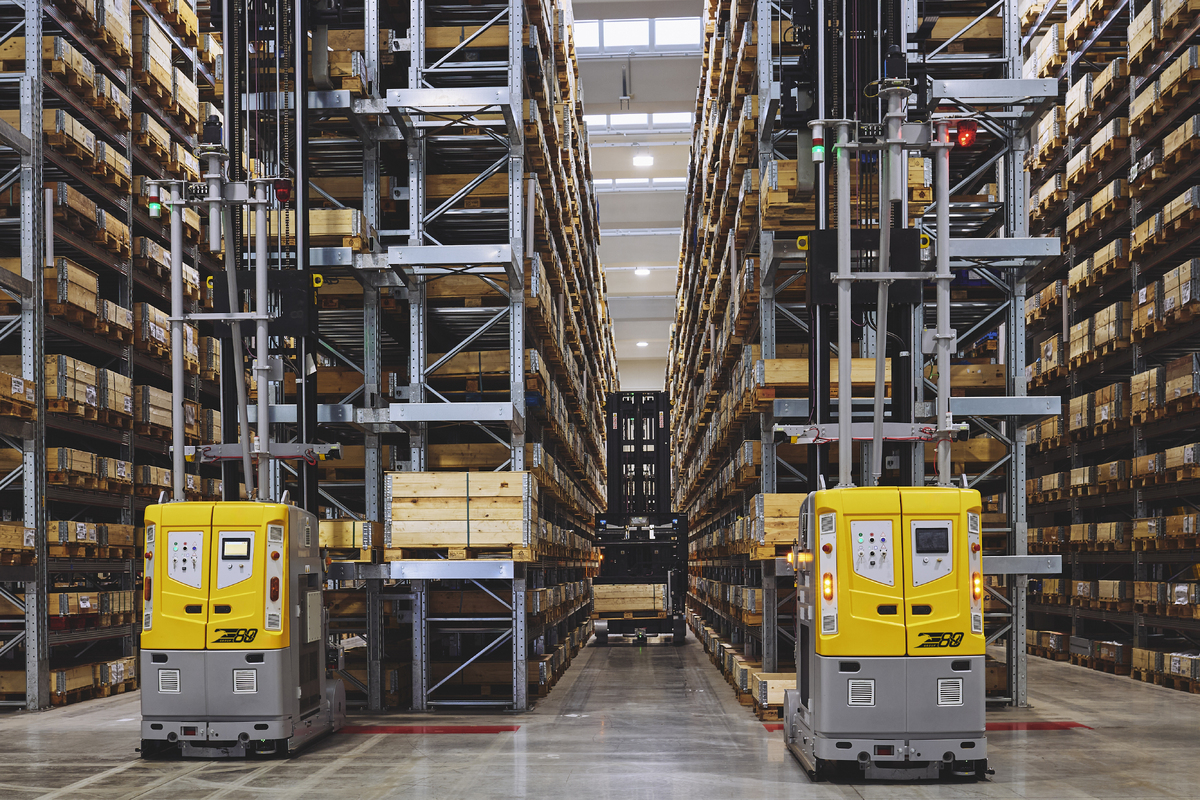
For a long time, intralogistics was understood as an operational asset. Move pallets faster. Reduce handling. Optimise routes. Improve density and space utilisation.
Smart and modular automation systems helped achieve all of this by replacing manual tasks with machines that executed predefined actions.
Today, modern intralogistics systems do not just move goods from A to B. They manage complex operations and they continuously generate, exchange and act on data. Every movement, every decision and every interaction inside a factory or distribution centre produces information that feeds the system itself.
In other words, intralogistics has become also a data environment.
A network of systems managed by a unique software
Automatic laser-guided vehicles, robotic storage systems and automated warehouses are now equipped with sensors, onboard intelligence and permanent connectivity. They communicate with each other, adjust their behaviour and respond to what is happening within the plant and around them.
At scale, hundreds of these systems operate simultaneously. Some move materials, others store them, others manage priorities and exceptions.
Software sits above this activity, co-ordinating flows and resolving conflicts in real time.
What used to be a sequence of mechanical actions is now a continuous exchange of information. Facilities increasingly behave like networks, where decisions are distributed and outcomes are physical.
And like any network, intralogistics is only as reliable as the data and logic that drive it.
Smart intralogistics as a data collector in motion
In fact, one of the most underestimated aspects of smart intralogistics is its role as a data generator and collector.
Every vehicle becomes a sensor. Every route change becomes a data point. Congestion, missions, battery levels, shifts in timing and even exceptions are captured automatically, often without any additional infrastructure.
This turns intralogistics into a powerful data engine in motion.
When this data is structured and analysed correctly, it provides an up-to-date picture of how operations actually behave, not just how they were expected to behave during the design phase. It reveals bottlenecks, highlights risks and exposes patterns that would otherwise remain invisible.
This is where artificial intelligence (AI) becomes a natural extension of intralogistics systems. AI-driven analytics can correlate thousands of variables, detect anomalies early and support scenario-based decisions. Rather than replacing human expertise, AI helps make sense of complexity at scale.
Why cyber-security at the core of system design
As intralogistics becomes more connected and data-driven, cyber-security moves from the periphery to the core of system design.
The primary risk is no longer limited to data theft. In industrial environments, compromised data leads to compromised decisions. Disrupted communication affects safety. Unreliable behaviour undermines trust in automation.
Traditional IT security models, based on isolation or shutdown, struggle in these contexts. Intralogistics systems cannot simply be stopped without operational and safety consequences.
Cyber-security in smart intralogistics therefore has a different role. It must preserve continuity, ensure data integrity and maintain system predictability while operations continue to run.
Security is about ensuring that data, decisions and movements remain trustworthy.
Software as the nervous system of secure intralogistics
At the centre of this transformation lies software.
In smart intralogistics environments, software acts as the nervous system that connects machines, data and decisions. It orchestrates movements, manages priorities and ensures that information flows consistently across the operation.
To support cyber-security in this context, software cannot be fragmented. A unified, proprietary platform allows data governance, decision logic and security to evolve together, rather than being added in disconnected layers.
This approach increases visibility across the system, making it possible to understand what is happening in real time and to detect abnormal behaviour before it escalates. Cyber-security becomes embedded in how the system operates, not imposed from the outside.
Designing trust into data-driven intralogistics
As factories and distribution centres continue to adopt intelligent, connected systems, trust becomes a design requirement.
Trust in data. Trust in decisions. Trust in the interaction between people and increasingly autonomous machines.
Cyber-security plays a critical role in enabling this trust. It protects not only systems, but the quality of the information that leaders rely on to make decisions.
In smart intralogistics, data is as valuable as the goods being moved. Protecting that data means protecting performance, safety and the ability to innovate.
As AI and software continue to expand what intralogistics systems can do, cyber-security becomes the quiet foundation that allows these technologies to deliver value at scale.
To learn more about how software, AI and cyber-security are shaping smart intralogistics, visit www.e80group.com

Business Reporter Team
You may also like
Related Articles


Related Articles
Most Viewed


Winston House, 3rd Floor, Units 306-309, 2-4 Dollis Park, London, N3 1HF
23-29 Hendon Lane, London, N3 1RT

020 8349 4363

© 2025, Lyonsdown Limited. Business Reporter® is a registered trademark of Lyonsdown Ltd. VAT registration number: 830519543