



Digital recruitment: the nuance missing from headlines
Rohit Raghuvansi at Leapwork explores how AI is changing software engineering and QA hiring:


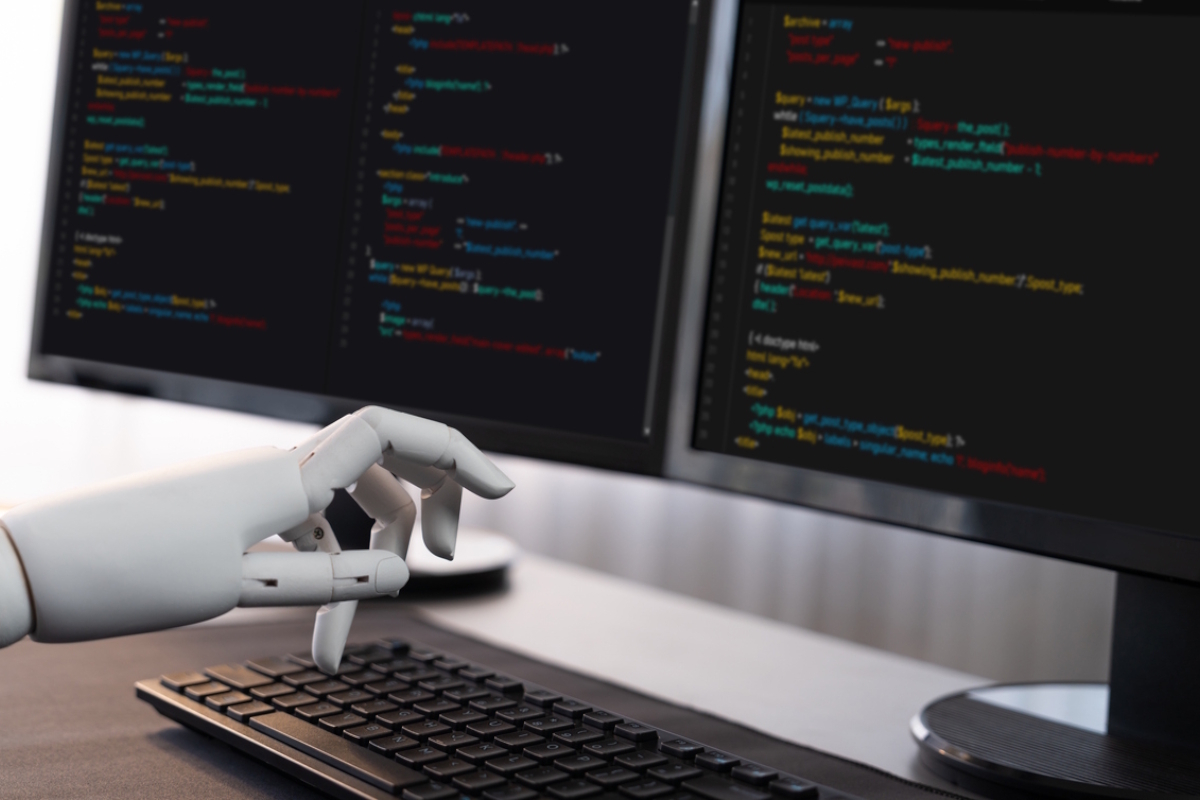
Software quality pioneer Watts S. Humphrey famously declared in 2002 that “every business is a software business.” Now, most businesses have become AI businesses. AI-enhanced software delivery, deployment and testing capabilities mean that organisations can now build more applications that are better than ever.
What does this mean for the engineers who have come to play central roles in most companies over the past couple of decades? Do their jobs go away in an era when AI models and agents can take the lead in writing, testing, deploying, and managing the code that powers their employers’ businesses?
The short answer is “no,” and the reason why is straightforward: Although AI has made it easier than ever to produce software, it has also created more software than ever. More software means a greater need for humans who can handle requirements that AI struggles to address fully, like application design, governance, and compliance.
The longer answer is more layered. While there are a lot of inaccurate beliefs within technology hiring, there’s a clear roadmap that smart software engineers and QA professionals can follow to ensure they remain relevant in their respective hiring markets.
Is AI taking software and QA engineering jobs?
I’ll start by addressing one of those inaccurate beliefs that has become a widespread narrative in the media: The idea that AI is making it arduous for software developers and QA engineers to find and keep jobs.
It’s true that technology industry layoffs have surged in recent years and that job openings for software engineers are down. Just because these trends correlate with growing adoption of AI by businesses doesn’t mean that AI is actually eating engineering jobs. Correlation doesn’t necessarily imply causation.
The real story is more nuanced. Counterbalancing the decline in positions for traditional software and QA engineering is a massive 70% year-over-year increase in jobs that require AI expertise.
This is because companies are retooling their operating models to take full advantage of AI. An inevitable component of that retooling is a reduction in repetitive engineering roles (like implementing basic code or executing simple automated QA tests) that can be outsourced to modern AI tools. At the same time, demand for engineers who can oversee the AI tools and manage the many novel challenges AI presents is surging.
AI is also prompting companies to alter how they allocate their budgets. Companies are shifting people-related costs to AI tools since tokens are expensive and organisational budgets are fixed. Lower employee spending is another reason we are seeing layoffs.
Software and QA engineer layoffs and hiring declines are also, at best, imperfect signals of what is actually happening in the job market. In addition to reflecting the pivot toward new, AI-centric operating models, they are also driven by trends that have nothing to do with AI. These include over-hiring in the early 2020s, and reducing costs and flattening management hierarchies to reduce costs and streamline operations.
AI-capable engineers will get hired
The engineering organisations that emerge from these trends will look nothing like those of the earlier 2020s. That’s where the incredible opportunity for software developers and QA experts who are prepared to capitalise on the market’s ongoing disruption lies.
Engineering has not disappeared. There remains a profound need for companies to design, validate and manage code effectively. Indeed, the emergence of AI-assisted software development and “vibe coding” means that the typical organisation now has more code than ever to manage. And by extension, it requires more engineering expertise than ever.
Creating software is only one component of engineering software. Vibe coding tools are great at churning out code quickly to build product demos. However, quality production software requires much more than just raw code. It needs a carefully designed architecture, security controls, quality and performance validation, observability, release management, change management, compliance and governance and more. These are areas in which AI can help in various ways, but where it is hardly a full substitute for human engineering expertise.
Ultimately, AI is not simply taking away software engineering jobs; it is reshaping them. Engineers who can align application architectures with business strategy, oversee feedback loops and drive cross-functional collaboration are only growing in relevance. Work like this requires human skills that AI will never fully possess, no matter how advanced AI models or agents become.
How to upskill for the AI era
Engineers worried about finding and keeping jobs in the AI era certainly need to uplevel their skill set. As frontier AI models become part of the software delivery stack, companies now need engineers who can design agentic workflows, manage model behaviour, build evaluation systems, control cost and latency, and ensure governance, security, and reliability. This need is creating a new category of software engineering roles focused on making AI systems production-ready, trusted, and scalable.
But engineers’ upskilling efforts shouldn’t focus only on learning to use AI tools. Honing “soft” skills, like judgment and community building, will be key differentiators in an AI-native SDLC in which AI handles execution, but humans still decide what to build, navigate tradeoffs, and maintain the shared understanding among teams. Interpersonal skills like customer empathy and team communication remain just as essential to maintain the social fabric of work.
Software and QA engineers who excel in these areas are the ones who will continue to get hired in the changing job market. AI has made their future brighter than ever.
Rohit Raghuvansi is the CTO of Leapwork
Main image courtesy of iStockPhoto.com and Moment Makers Group

Business Reporter Team
You may also like





Most Viewed


Winston House, 3rd Floor, Units 306-309, 2-4 Dollis Park, London, N3 1HF
23-29 Hendon Lane, London, N3 1RT

020 8349 4363

© 2025, Lyonsdown Limited. Business Reporter® is a registered trademark of Lyonsdown Ltd. VAT registration number: 830519543