



Consulting’s risky gap between AI confidence and control
Sponsored by LexisNexisManagement consultants are highly confident in AI, but uneven controls and shadow use are creating growing credibility risks


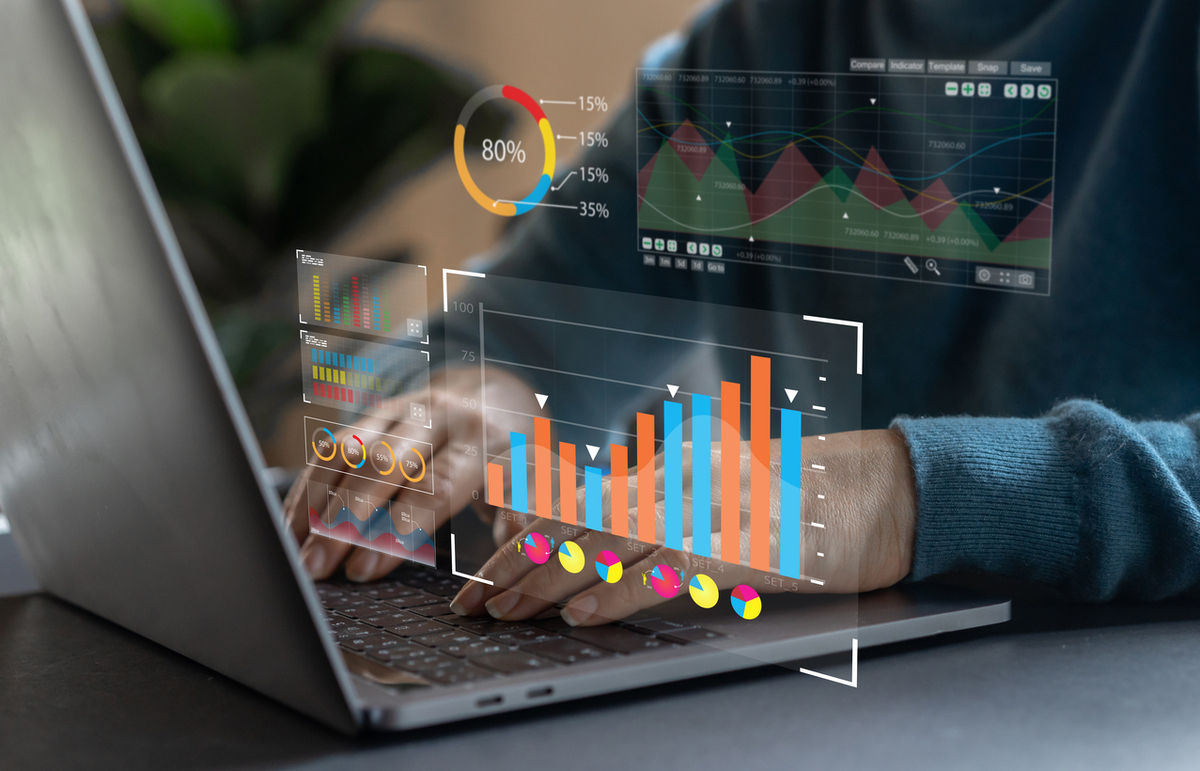
Management consulting has never struggled with confidence. But as generative AI becomes embedded in everyday consulting work, that confidence is starting to outpace control.
The 2026 LexisNexis report Future of Work in Professional Services reveals a crucial gap: management consultants are among the most confident users of AI in professional services, yet they are also operating in some of the most fragmented governance environments. High self-assurance sits alongside skills deficits, inconsistent guidance and widespread use of unapproved tools.
That gap matters because consulting sells expertise. When AI‑assisted insights cannot be clearly traced, validated or explained, even technically sound outputs become difficult to defend. The risk firms face is losing their ability to demonstrate why their expertise and strategies should be trusted.
The uncomfortable truth about consultants and AI
Consultants are using AI daily, integrating it into research, drafting and analysis. On the surface, the sector appears to be leading the way.
The data supports that impression, as 72 per cent of management consultants report being very or extremely confident using AI, compared with 64 per cent across other industries. Nearly half say they can confidently explain how large language models work, and 62 per cent report having launched AI agents. This is well ahead of the cross-industry average found in the report.
However, the same data reveals a fragile reality. Advanced adoption is not being matched by governance maturity, with only 65 per cent of consultants saying their organisation has an AI policy. Even where policies exist, understanding is uneven; 44 per cent of management consultants identify explaining how AI tools work as a top organisational need, while 50 per cent cite misinformation as their primary concern when using AI.
Confidence in AI, then, often reflects familiarity with tools rather than fluency in how those tools create insight. 48 per cent of consultants struggle with writing effective prompts and 42 per cent cite lack of training as their top productivity barrier. Polished outputs and quick results can make early use feel effective, even when core skills, such as prompt quality and validation, are still underdeveloped.
Confidence combined with a lack of understanding result in consultants relying on AI‑assisted judgement without fully developing the skills needed to challenge, explain or defend it. That risk is already tangible, such as the recent case of a large consultancy being forced to discipline and fine staff, including senior partners, for inappropriate use of generative AI as part of AI competency assessments.
What looks like adoption at speed can actually be covering a lack of understanding and governance.
How speed can become a governance issue
The Future of Work 2026 report shows that consultants are not naive about AI risk. Concerns about accuracy, data exposure and client sensitivity are well understood. Yet unofficial tool use persists because the pace of client‑facing work has not slowed to accommodate governance maturity. When timelines tighten, delivery is prioritised.
Enter shadow AI: the use of unapproved AI tools to meet delivery demands when official systems aren’t satisfactory.
More than half of professionals (54 per cent) report using unapproved gen AI when efficiency demands it, and 55 per cent say they personally pay for AI tools, with most using them directly for work. This behaviour presents itself often in drafting materials. Consumer‑grade gen AI tools are used to shape slide narratives, executive summaries or proposal frameworks when approved tools are slow, limited or unavailable. Here, AI becomes embedded quietly, without formal oversight, simply because it helps the work move forwards.
This is where speed begins to overtake control. Shadow AI does not replace judgement, but it does influence it. Governance frameworks designed for slower, more deliberate workflows struggle to keep up. When unofficial AI use leads to faster turnaround and positive client feedback, confidence grows and governance slips further into the background. The gap between how work is done and how it is supposed to be governed widens when speed becomes the dominant organising principle.
This exposes a mismatch between delivery expectations and control, leaving firms increasingly reliant on AI‑assisted work they may struggle to fully explain or defend.
Despite half of consultants citing misinformation as their top concern, and expressions of high confidence in the ability to use AI responsibly, unofficial tool use remains widespread. Speed is the deciding factor: 58 per cent say faster decision‑making is the primary value AI delivers, outweighing even time savings, while 42 per cent of those using AI without approval do so because official processes cannot match delivery demands. Shadow AI can be seen as a predictable response to work moving faster than governance and, unfortunately, it is at this point that credibility begins to come under strain.
When AI is inexplicable, credibility weakens
Clients expect advisors to explain how conclusions were reached, what assumptions were made and why a particular recommendation stands up to scrutiny. This is where the confidence–control gap exposed by AI use becomes most visible.
Gen AI produces outputs that are often fluent, well-structured and persuasive. But the moment a client asks why or how, and the rationale behind those outputs is unclear, credibility immediately weakens.
In a profession built on trust, this matters. Each instance where AI‑assisted work cannot be clearly explained makes the next explanation harder. The challenge facing consulting firms is whether AI‑influenced advice can still be defended with the clarity that clients expect.
As adoption accelerates and delivery pressure intensifies, the ability to explain, validate and illustrate the provenance of AI‑assisted insight will be what differentiates top firms.
To explore the data behind consulting’s growing confidence-control gap, read the Future of Work 2026 report from LexisNexis
For a broader, cross-industry view of how generative AI is reshaping work, including key findings and resources by sector, explore the 2026 LexisNexis Future of Work report
by Danielle McCormick, VP of Product Management, Global Nexis Solutions

Business Reporter Team
You may also like





Most Viewed


Winston House, 3rd Floor, Units 306-309, 2-4 Dollis Park, London, N3 1HF
23-29 Hendon Lane, London, N3 1RT

020 8349 4363

© 2025, Lyonsdown Limited. Business Reporter® is a registered trademark of Lyonsdown Ltd. VAT registration number: 830519543