



When disruption bites, customs and compliance is more important than ever
Sponsored by Customs Support GroupEmmett Young, key account director at Customs Support Group, looks at the impact of ongoing global uncertainty on retail supply chains


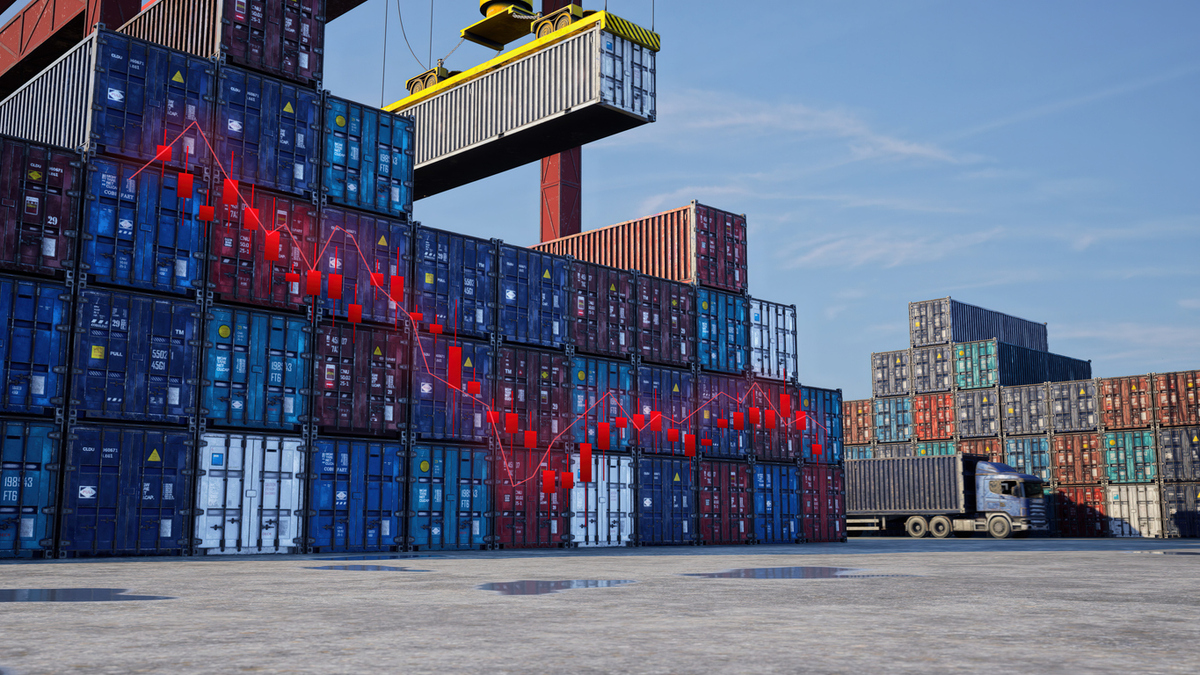
Just when the logistics sector has absorbed and adapted to the effects of one crisis, another always seems to rise alligator-like to the surface. As the US and Israel’s war with Iran ramps up – spiking energy prices and disrupting shipping through the Strait of Hormuz – the veritable hydra of challenges facing retail supply chains throughout the UK, Europe and the US seems to have grown another head.
Customs and trade compliance has always been an essential element of retail supply chains. Mass disruption may cast a light on more obvious pain points such as unwanted delays, rising fuel bills and other immediate impacts of a supply chain under strain. But at times when margins tighten and international trade flows less smoothly, customs and compliance becomes an increasingly essential link in the global supply chain.
Many organisations, however, remain understaffed and underprepared in this matter. They continue to operate reactively rather than proactively, and do so without the necessary expertise to navigate their goods and materials across borders without issue. In an increasingly unstable geopolitical context, that combination poses serious risk.
A disruption hydra: war, tariffs and regulatory hurdles
Few sectors have escaped the disruption created by shifting US trade and foreign policy. For retailers, the most recent round of US tariffs has created particularly intense pressure. What was initially expected to be a marginal increase in costs has spiralled into a toothy issue demanding a re-evaluation of how brands approach moving goods in and out of the US market.
At the same time, regulatory changes are complicating market entry. The removal of the $800 de minimis exemption has proved as disruptive as the tariffs themselves. Shipments that previously moved with minimal customs intervention are now subject to duties and detailed documentation requirements.
Low-value test orders and direct-to-consumer shipments have become significantly more troublesome and expensive to manage. An added wrinkle is the fact that carriers have started adding clearance charges on top of duties, further increasing costs for low-value shipments where margins were slim to begin with.
In many cases, customers are not only responsible for the tax but also an additional processing fee and sometimes even a margin applied to the duty itself. In a world where e-commerce customers expect to be able to pick two from the list of fast, free (or at least affordable) and convenient shipping (not to mention returns), this can quickly sour customer relationships and erode loyalty.
Now, to make matters worse, the war in Iran threatens to kick the legs out from under an already-unsteady global supply chain.
For retailers, the situation demands a difficult balancing act. Consumers expect shelves and online catalogues to remain fully stocked and competitively priced, but supply chain costs are rising. Retailers already expecting to raise prices and tighten their margins cannot afford further disruption at the border.
Classification risks are growing
Correctly classifying goods has become a critical component of this balancing act, and both importers and exporters are navigating an increasingly complex regulatory environment with increasingly narrow margins for error.
Failure to classify goods correctly can result in unexpected duties, fines and delays. Companies are often forced to absorb these costs within already tight margins or pass them on to customers.
Our second Strategic Radar Customer Survey highlights the scale of the issue – as many as 70 per cent of businesses may be exposed to risk due to goods misclassification.
The report finds that geopolitical uncertainty, volatile markets and expanding regulatory frameworks are pushing customs and trade compliance higher on the corporate agenda. However, many organisations still lack the specialist knowledge and internal capacity required to manage the growing complexity.
More than half of businesses (50.5 per cent) face latent misclassification risk because they have not conducted a classification review, and fewer than half carry out periodic checks despite 28.3 per cent already experiencing negative consequences of customs misclassification, such as higher costs or customs audits. This state of affairs reinforces the importance of robust governance and experienced human oversight in the correct and accurate classification of goods.
Increasing reliance on external expertise
As regulatory complexity increases, customs management is becoming more visible within organisations – but operational customs activities continue to be heavily outsourced.
Around 70 per cent of shippers do not maintain an in-house customs clearance team. Where internal teams exist, they are typically small, often consisting of four full-time employees or fewer. Although 22 per cent of companies have recently hired additional customs specialists, plans for further recruitment remain limited.
As a result, increasing compliance demands are likely to be addressed through greater reliance on external partners rather than significant internal expansion. More than a third (38 per cent) of companies say the lack of specialised customs knowledge remains the main reason for outsourcing, with a further third citing a lack of capacity. Just under 30 per cent consider outsourcing to be more cost-effective, with added advantages such as access to digital solutions and support with rapidly changing regulations.
Luckily, when in-house capacity is limited, partial outsourcing to trusted external partners is showing to be an effective approach to plugging organisational gaps. These external partners are increasingly seen as more than transactional service providers, becoming long-term enablers of resilient and compliant supply chains at a moment when the margins for error at the border are slimmer. The hydra of supply chain disruption has many heads. Retailers cannot afford to add customs and compliance to the beast when disruption is already biting.
Customs Support Group (CSG) is the leading European customs and trade solutions provider, facilitating seamless cross-border operations through cutting-edge digital innovations and unmatched industry expertise. For more information, please visit customssupport.com/contact/


Business Reporter Team
You may also like



Most Viewed


Winston House, 3rd Floor, Units 306-309, 2-4 Dollis Park, London, N3 1HF
23-29 Hendon Lane, London, N3 1RT

020 8349 4363

© 2025, Lyonsdown Limited. Business Reporter® is a registered trademark of Lyonsdown Ltd. VAT registration number: 830519543