



The American View: Bloodless Sport


Power dynamics at the executive level can seem peculiar to an outsider. Instead of violence or decisive battles, many organisations’ internal power struggles seem to consist largely of petty insults and minor public posturing. That’s a reflection of zero-sum credibility mindset that many companies hold combined with a low tolerance for open aggression.
Watching the U.S. Democratic Party presidential candidate debates on 30th and 31st July was painful. Sure, there were a few good zingers that earned a laugh, however those entertaining moments weren’t compelling enough to make the rest of the experience bearable. The four hours of ‘debating’ became a cringeworthy slog. There were far too many people competing for the spotlight. Making things worse, all twenty contenders were hobbled: they were allotted insufficient time to make compelling arguments and were frequently cut off by the moderators. It made sense that their ‘best’ lines were the snarky counters they employed against one another.
What really chapped my hide was that all of these presidential contenders were ostensibly on the same team. Several speakers attempted to reassure the audience that – despite their petty squabbling – they all hold similar values and that all of them are better than the opposition party’s offering. Saying it is one thing; in practice, all of their squabbling over petty differences and long-smouldering grudges made it seem like they’d all lost sight of the competition.
Worse, the Democratic party debates sounded exactly like the Republican party debates from the last election cycle. Both events featured the same sly zingers, the same feigned indignation, the same parade of unmoored numbers and statistics, and the same desperate ‘LOOK AT ME!’ posturing. They might well have been the same event, interpreted by two different directors.
There’s a reason for that, and it has nothing to do with politicians. Politics, yes. That is to say, it’s about human nature, office politics, and the struggle for credibility. It’s about competition and the limited means that white-collar rivals sometimes have for standing out in a crowded field when traditional methods of establishing dominance are frowned upon by culture or policy.
 POC is Keil Hubert, keil.hubert@gmail.com
Follow him on Twitter at @keilhubert.
You can buy his books on IT leadership, IT interviewing, horrible bosses and understanding workplace culture at the Amazon Kindle Store.
Keil Hubert is the head of Security Training and Awareness for OCC, the world’s largest equity derivatives clearing organization, headquartered in Chicago, Illinois. Prior to joining OCC, Keil has been a U.S. Army medical IT officer, a U.S.A.F. Cyberspace Operations officer, a small businessman, an author, and several different variations of commercial sector IT consultant.
Keil deconstructed a cybersecurity breach in his presentation at TEISS 2014, and has served as Business Reporter’s resident U.S. ‘blogger since 2012. His books on applied leadership, business culture, and talent management are available on Amazon.com. Keil is based out of Dallas, Texas.
POC is Keil Hubert, keil.hubert@gmail.com
Follow him on Twitter at @keilhubert.
You can buy his books on IT leadership, IT interviewing, horrible bosses and understanding workplace culture at the Amazon Kindle Store.
Keil Hubert is the head of Security Training and Awareness for OCC, the world’s largest equity derivatives clearing organization, headquartered in Chicago, Illinois. Prior to joining OCC, Keil has been a U.S. Army medical IT officer, a U.S.A.F. Cyberspace Operations officer, a small businessman, an author, and several different variations of commercial sector IT consultant.
Keil deconstructed a cybersecurity breach in his presentation at TEISS 2014, and has served as Business Reporter’s resident U.S. ‘blogger since 2012. His books on applied leadership, business culture, and talent management are available on Amazon.com. Keil is based out of Dallas, Texas.
![/><em>So many interpersonal and professional conflicts could be settled efficiently if only we allowed trial-by-combat in the breakroom. </em></p>
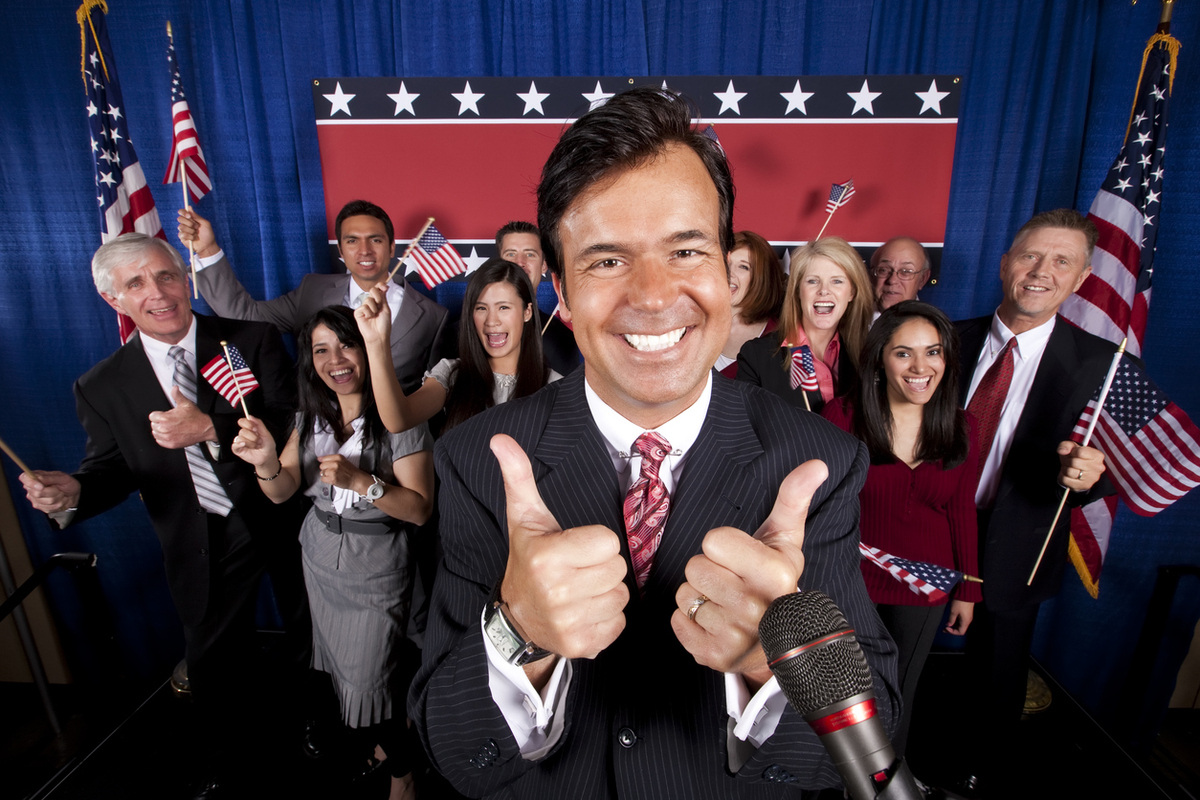
Hear me out: the U.S. presidential candidate debates remind me of nothing so much as a high-level corporate leaders’ meeting. All the same dynamics are in play: a large roster of influential people vying for supremacy, a very short window to advance one’s personal brand, policy positions wielded as weapons, and a constrained environment where no one can improve one’s own relative status save by stealing status from another. It’s like a game of ‘king of the hill’ where the players push their rivals off of the top spot with clever language instead of an honest shove.
I used to attend events like this fairly regularly back when I worked in large organisational headquarters. [1] Once per week, the Big Boss would gather all of his division executives together for an all-morning formal meeting. They had a routine: the meeting would always open with a banal safety briefing. Each of the division executives (always starting with the head of operations) would then brief their plans for the coming week. Finally, the ‘back-benchers’ (like Finance, Personnel, IT, etc.) would advise on any events coming in next 7-15 days. The Big Boss either briefed his portion first – right before his junior executives spoke – or waited until after everyone else, depending on his mood. As always, the Big Boss had the last word on everything.
I attended these ritual meetings for my own situational awareness, since it was usually the only way that I’d learn about pending events that my department might be expected to support. I’d occasionally speak up to pre-emptively mitigate trouble by letting the bosses know about bad news before they heard about it through the rumour mill. I mostly just listened, took notes, and enjoyed getting paid to sit in a comfy chair for an hour while it was blazing hot outside.
At first, I thought these were normal staff meetings. They seemed a <em>little</em> different from what I’d experienced in the army (in that, they were <em>way</em> too long and overly florid). Over time, though, I noticed that these meetings were strangely inefficient. Most of the participants weren’t there to relay or capture timely information. Instead, it seemed like they’d only attended to boost their own ‘brand’ … at the expense of someone else’s. All of the major recurring players treated the weekly meeting as a zero-sum cage-match with boasts for weapons and prestige for spoils.
<p style=](https://s32182.p980.sites.pressdns.com/wp-content/uploads/2020/04/iStock-486789467.jpg)


![/><em>… and even worse in-person events. You can at least mute a television. You can’t escape a ten hour ‘strategy session’ without pulling the fire alarm. </em></p>
This, I suspect, is why our would-be political leaders do what would-be leaders do in every board room across America: they have to ‘play nice’ in order to stay in the fight at all. So, they all put on a seemingly-civil act and attempt to publicly raise their own status while undercutting one or more rivals’ status in minuscule increments in the hopes that the Powers That Be will pick them to advance when the time comes. It’s a low-impact fight with potentially high-impact outcomes.
This is a bit depressing when we’re talking about putting someone in charge of a nation of three hundred million people. I argue that it’s a lot scarier when we’re talking about putting someone in charge of a corporation (or a division therein). Presidents and congresspersons have <em>some </em>checks and balances to keep them from deviating too far into destructive territory. [2] A vain narcissist placed into a crucial leadership role in a corporation can sometimes inflict a great deal more short-term damage than a politician can. Still and all, it’s an awful way to pick a leader, especially when the lives of us ‘little people’ are on the line.
<hr />
[1] To be fair, I wasn’t technically ‘invited’ to these meetings. As head of IT, I invited myself by simply showing up. It was nearly six years before a new Big Boss decided to throw me out.
[2] We used to, at any rate.
Cultural Allusion: Sheldon Lettich, <a href=](https://s32182.p980.sites.pressdns.com/wp-content/uploads/2020/04/iStock-1125643447.jpg) Bloodsport (1988 action movie)
Bloodsport (1988 action movie)
POC is Keil Hubert, keil.hubert@gmail.com
Follow him on Twitter at @keilhubert.
You can buy his books on IT leadership, IT interviewing, horrible bosses and understanding workplace culture at the Amazon Kindle Store.
Keil Hubert is the head of Security Training and Awareness for OCC, the world’s largest equity derivatives clearing organization, headquartered in Chicago, Illinois. Prior to joining OCC, Keil has been a U.S. Army medical IT officer, a U.S.A.F. Cyberspace Operations officer, a small businessman, an author, and several different variations of commercial sector IT consultant.
Keil deconstructed a cybersecurity breach in his presentation at TEISS 2014, and has served as Business Reporter’s resident U.S. ‘blogger since 2012. His books on applied leadership, business culture, and talent management are available on Amazon.com. Keil is based out of Dallas, Texas. 
Keil Hubert






Most Viewed


Winston House, 3rd Floor, Units 306-309, 2-4 Dollis Park, London, N3 1HF
23-29 Hendon Lane, London, N3 1RT

020 8349 4363

© 2025, Lyonsdown Limited. Business Reporter® is a registered trademark of Lyonsdown Ltd. VAT registration number: 830519543