



Beyond the cell: the benefits of D2D satellite networks
Stefano Nicoletti at the Mobile Ecosystem Forum explains how direct-to-device satellite networks are transforming connectivity in the UK
Last year, an American hiker found himself suddenly stranded in the mountains of Colorado, struggling to breathe, until a satellite-enabled SOS from his companion triggered a rescue that would ultimately save his life. The distress message jumped from a handheld device straight to a satellite network, alerting emergency responders. A life-saving intervention that wouldn’t have been possible with mobile terrestrial coverage alone.
This is just one example of the benefits that Direct-to-Device (D2D) satellite networks can bring. This silent revolution is promising to be applicable in many fields. As traditional mobile phones will be able to receive signals from LEO satellites, existing mobile network operators’ coverage will extend where today’s terrestrial-only networks don’t.
The first to launch was VMO2 last February, claiming their landmass coverage increased by 6% or two-thirds of Wales. The service comes as a £3 per month bolt-on and will allow messaging and calls on WhatsApp and a range of other supported apps.
Vodafone instead partnered with AST SpaceMobile to create a new joint venture to offer wholesale satellite coverage across Europe. As of March 2026, they have secured regulatory approvals in the UK, completed commercial testing, but have not yet started operations. EE has not launched services either; while it has begun talks with Starlink, there are no expected dates for launch yet.
Why extend networks to satellite?
Why are UK operators and those around the world keen to extend their networks to satellite? Essentially, D2D can enable new use cases and can reduce the costs of delivering their coverage obligations.
First, as in the example above, it will enable emergency communication in places where mobile coverage simply doesn’t reach. Whether it’s a remote coastal path, the Highlands, or an isolated farming community, satellite links offer a lifeline when the terrestrial network disappears.
Secondly, it makes coverage to the UK’s rural and hard-to-reach “not-spots” possible —areas where it has never been economically viable to build full terrestrial infrastructure. This is especially valuable in a country where pockets of rural and coastal Britain still struggle with patchy reception.
The UK regulator, Ofcom, believes satellite-enabled phones could help fill those gaps and eventually support near-universal outdoor coverage as satellite constellations grow. Importantly though, Ofcom measures coverage as outdoor only: D2D networks will not work in-building as the signal comes in too faint to cross roofs, walls or windows. A big limitation for end users, and for D2D’s a tricky one to solve.
Third is network resilience. When storms, power cuts, or accidental damage take out mobile base stations, satellite connectivity can step in as a fallback layer, keeping people connected and allowing emergency and recovery services to continue operating. This resilience function is one of the strongest arguments for early rollout.
New possibilities for the IoT
Finally, D2D satellite links open new possibilities for the Internet of Things (IoT), especially for low-power devices in remote environments. Many IoT sensors—such as those monitoring water systems, environmental conditions, agriculture or remote security—only need to send small bursts of data and don’t depend on real-time connectivity. Satellite may also give a second life to mobile-based IoT, using 3GPP standards that failed to break through, such as NB-IoT.
Ofcom’s framework
Ofcom’s final framework allows D2D services on mobile bands below 3GHz (including 700MHz–2.6GHz), which are all standard 4G/5G frequencies. Satellites will use these frequencies alongside terrestrial networks, enabling better propagation and compatibility with regular smartphones. MNOs can expand coverage by integrating satellites as ’cells in the sky’.
However, sharing spectrum does not mean identical radiofrequency behaviour; satellite antennas and mobile handsets interact differently than with terrestrial cells. Technical challenges like interference control and network coordination must be addressed. Ofcom’s decision aligns with mobile vendors’ preference for devices with broad marketability, avoiding the need for multiple standards.
Devices and services
Millions of smartphones are already being shipped with satellite messaging capability today, these are mostly top-end phones like Samsung Galaxy S25, Google Pixel 9, Huawei Mate 60 Pro. They all added two-way messages and image sharing this year. These are typically expensive devices and only allow for messaging. This adds another layer of complexity to D2D adoption: it will take time before everybody has a satellite-enabled phone, and then it may be just able to send messages!
True satellite-delivered broadband and voice services in the UK will ultimately depend on how quickly satellite operators can roll out their new constellations and integrate with mobile spectrum. As things stand, operators such as AST SpaceMobile, Starlink, and the newly formed SatCo will act as wholesale providers, supplying space-based connectivity to mobile network operators rather than going directly to consumers.
UK MNOs would remain the customer-facing brand, with satellite connectivity becoming just another layer of their network experience.
In principle, users should be able to move between terrestrial and satellite coverage without noticing the transition — but achieving this seamless experience will depend on technical factors like handover performance, roaming behaviour, and how fully 3GPP NTN standards are implemented across both networks and devices.
With rules recently finalised by Ofcom, the UK has completed its D2D regulatory framework. Mobile network operators may request licence variations to support satellite-to-phone communications using existing mobile spectrum bands, and a forthcoming handset exemption will make it lawful for consumer phones to connect to satellites.
Stefano Nicoletti is an expert in mobile regulation at the Mobile Ecosystem Forum
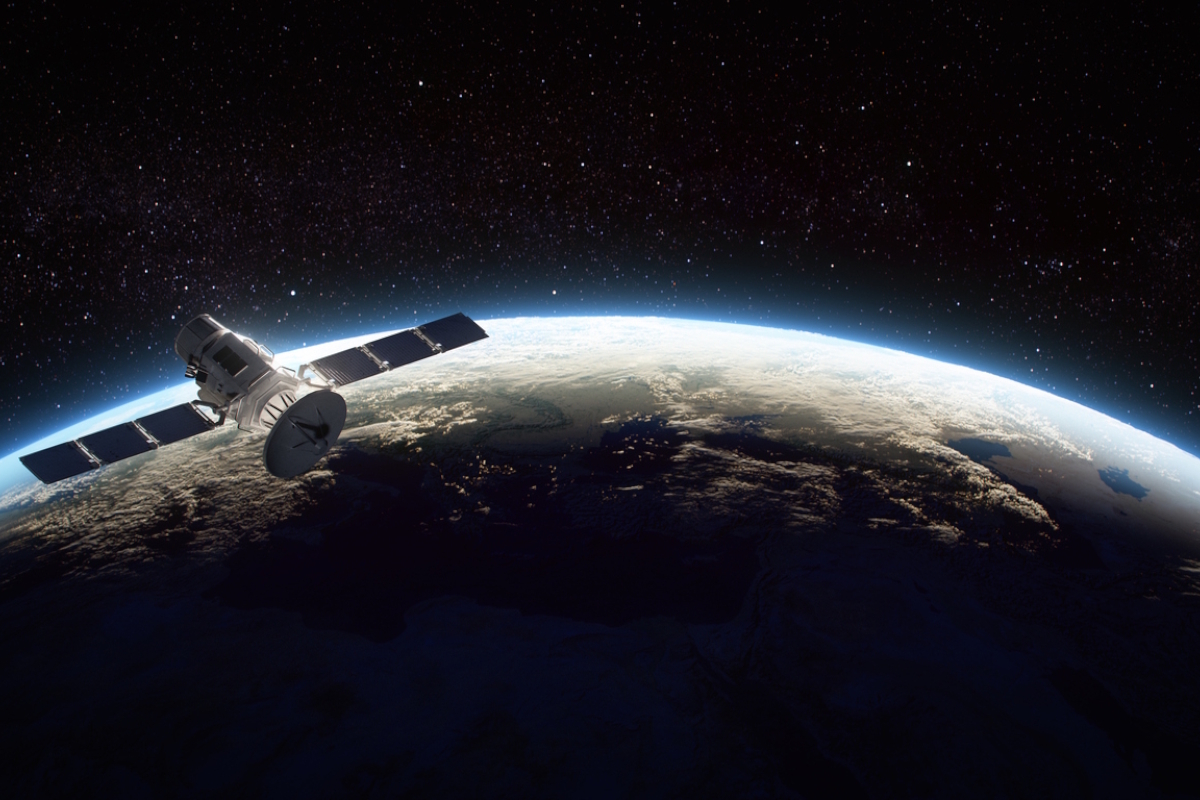
Main image courtesy of iStockPhoto.com and imaginima

Business Reporter Team
You may also like






Most Viewed


Winston House, 3rd Floor, Units 306-309, 2-4 Dollis Park, London, N3 1HF
23-29 Hendon Lane, London, N3 1RT

020 8349 4363

© 2025, Lyonsdown Limited. Business Reporter® is a registered trademark of Lyonsdown Ltd. VAT registration number: 830519543