



Understanding the lost opportunity in payment failures
Jon Reynolds at Access PaySuite describes a ‘hidden revenue gap’ that is costing UK businesses millions


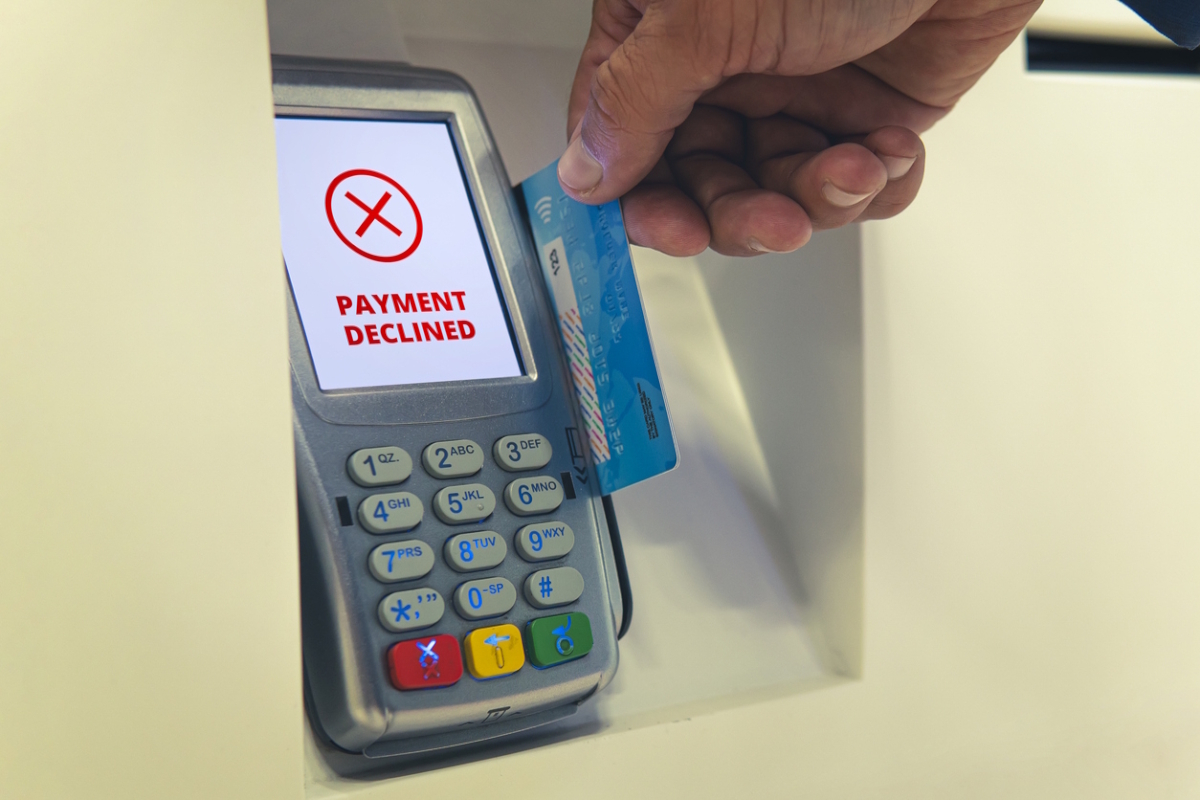
For most finance leaders at small and medium-sized enterprises, payment failures occupy an awkward blind spot. No single line on a profit-and-loss statement captures the cost of failed transactions, and the administrative burden of managing them spreads across teams and systems in ways that are rarely aggregated. The result is a problem that feels fragmented, difficult to quantify, and easy to deprioritise - even as it quietly strips revenue from businesses that can ill afford it.
The scale of that drain is larger than most organisations realise. Access PaySuite recently surveyed hundreds of management and finance professionals at UK SMEs and found that nearly half of respondents (49%) are losing between £5,000 and £100,000 annually to failed transactions, payment-related customer churn, and the administrative costs that follow.
Around 8% report annual losses of £1 million or more. On average, 3.4% of transactions fail, and 55.8% of those are never recovered.
Tony Craddock, Director General of The Payments Association, describes the nature of the problem precisely. “It’s a whole series of typically quite small failures,” he says. “Because all of these small little pieces are in different functions within the company, the size of the overall problem is often unknown. It’s almost like a hidden loss of revenue.”
An ecosystem built for leakage
The structural reasons for this are not difficult to identify. Modern payment systems were not designed with end-to-end visibility in mind. Authorisation failures, abandoned checkouts, refunds, chargebacks, and silent subscription churn each sit in separate dashboards, monitored by different teams with different priorities. SMEs that trade across borders, work with multiple payment service providers, or rely on ageing legacy infrastructure face an especially fragmented picture.
Sandra Mianda, Founder and CEO of Paypr.work, argues that the blind spot is as much cultural as technical. “Traditionally, payments have been seen as a cost centre,” she says. “The KPIs tracked are fees and approvals. But somewhere between intent and settlement, declines can have many different reasons that account for a lot more than what the data shows. There’s a real hidden opportunity in those failed transactions.”
The data bears this out. Nearly half of businesses surveyed report checkout abandonment, with an average rate of 7.8%. More than one in five say customers have switched to a competitor for a better payment experience. These are not isolated incidents; they represent compounding, untracked losses that businesses have no clear mechanism to identify or reclaim.
Chris Jones, Managing Director of payments consultancy PSE Consulting, points to fragmentation across the entire payments value chain as the central driver. Issuers decline transactions without full context; acquirers and card schemes apply their own risk frameworks; merchants manage refunds, disputes, and chargebacks through disconnected back-office systems. “If you can move them into a single user experience and allow those exceptions to be handled in a much shorter activity focused on edge cases,” he says, “that’s transformative.”
The time cost of a fragmented system
The problem is not only financial. More than 70% of organisations surveyed spend between five and 20 hours per week managing payment failures and their associated administration. Fewer than four in ten have full visibility into the wider revenue impact of payment problems across their business.
For smaller enterprises, the personal toll is acute. Jones puts the number in direct terms: three to four days per month spent on reconciliation between different financial systems. “If you ask small businesses what causes them pain,” he says, “it’s those exceptions of uncollected payments.” That is time diverted from growth, from customers, and from the core work that sustains a business.
The pattern holds across sectors. Finance teams responsible for charitable giving find that failed donations require follow-up calls that stretch already-thin operations; lapsed direct debit mandates are difficult and costly to reinstate. The technology that powers payment collection, as one senior fundraising professional notes, is “geared towards bringing payments in, rather than actually focusing on those failures.” The cost is not only financial; it is opportunity lost.
The case for intelligent recovery
Against this backdrop, it is little surprise that 95% of the SMEs surveyed are exploring AI-based systems as a means of identifying and recovering hidden revenue. The argument is intuitive: AI can process the volume and variety of payment data at a scale no human team could match, detecting patterns that would otherwise remain invisible across fragmented systems and datasets.
David Birch, an international adviser on digital financial services, articulates the fundamental value proposition directly. “It will find patterns. It will uncover connections. It will spot trends that you wouldn’t necessarily see yourself,” he says. The marginal effect of modest improvements is consequential: “You only need to take decline rates down by a small amount to add a lot.”
Mianda cautions that realising that potential requires more than basic automation. “The data is one thing,” she says. “But being able to interpret what that story tells you in your environment and process that in a way that drives intelligent decisions, that’s the next step.” In practice, that means systems capable of deciding dynamically whether to retry a failed transaction, route it differently, or adjust authentication triggers – all without compromising compliance or trust.
That shift toward an “intelligence layer” above existing payment infrastructure is beginning to shape how payment platforms are evolving. Access PaySuite, for example, recently introduced their payment platform with AI embedded, designed to help finance teams identify patterns behind failed transactions and revenue leakage, whilst freeing teams from spreadsheet exports and specialist analysis.
For UK finance leaders, the question is no longer whether a hidden revenue gap exists within their business – research suggests it almost certainly does. The more pressing question is whether they have sufficient visibility to measure it and the analytical capability to act.
Payment infrastructure built for a different era cannot be easily replaced, but the intelligence layer that sits above it is changing rapidly. For businesses willing to look, the gap is measurable, and the returns from closing it are real.
Jon Reynolds is Head of Product at Access PaySuite. To learn more about how AI-driven payments insights can help uncover hidden revenue and reduce payment failures, visit: www.accesspaysuite.com/ai-in-payments/
Main image courtesy of iStockPhoto.com and Diy13

Business Reporter Team
You may also like






Most Viewed


Winston House, 3rd Floor, Units 306-309, 2-4 Dollis Park, London, N3 1HF
23-29 Hendon Lane, London, N3 1RT

020 8349 4363

© 2025, Lyonsdown Limited. Business Reporter® is a registered trademark of Lyonsdown Ltd. VAT registration number: 830519543